
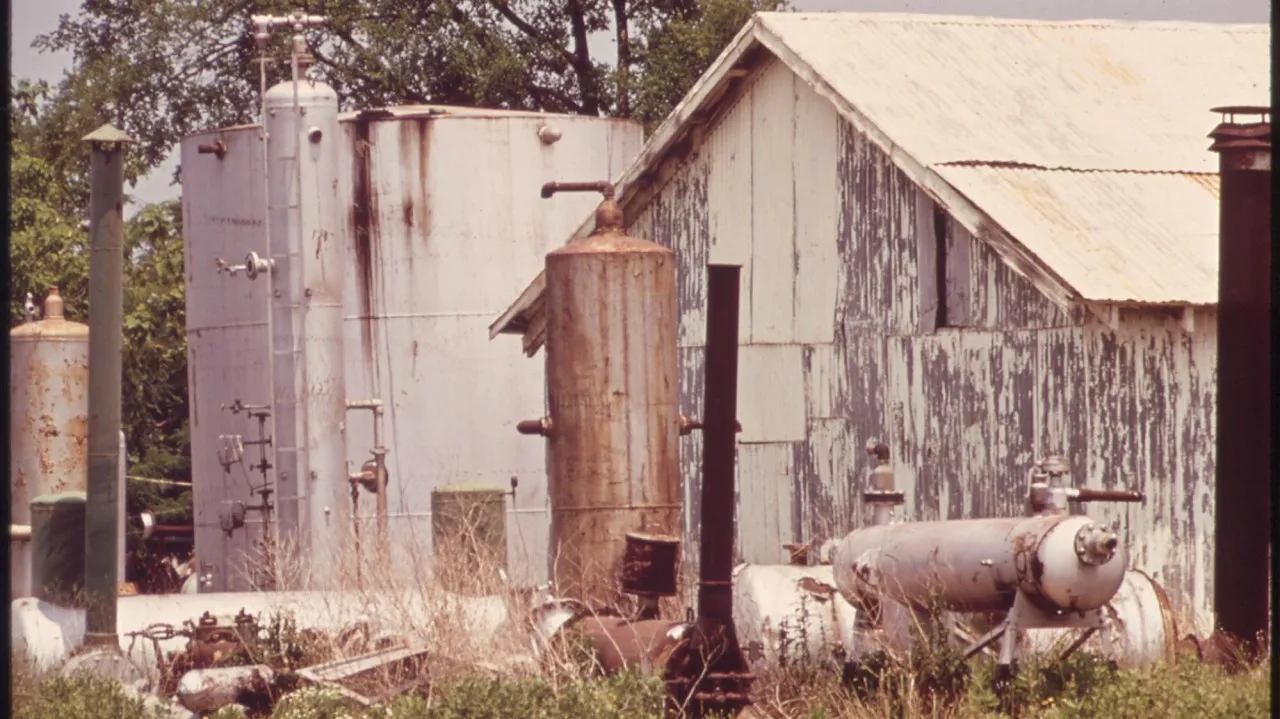
What does GEM’s oil and gas program have in common with zombies? While zombie stories rarely take place in unfinished gas plants, these abandoned or long-stalled buildouts have some pretty scary impacts and represent the kinds of trends our oil and gas team is skilled at measuring, tracking and dissecting.
Those in the energy sector refer to long-stalled oil and gas projects as “zombie projects” — those that are never built but never die. Zombie projects (not to be confused with zombie wells) can drag on for years or even decades without actually taking a step forward.
Zombie projects are often shelved — due to financing, economic, or market reasons — and later resurrected, sometimes in a new form or with a new name that obscures the owner or original plan. Potential causes of these revivals are numerous, from geopolitical crises that spark panic in the name of energy security, to political administrations that are friendlier toward new fossil fuel buildouts.
There’s a role for zombies in the energy transition: Stay on the shelf. While the gas industry has long branded gas as a “bridge fuel” between coal and renewable sources, a 2023 study found that the full life cycle of gas, even accounting for methane leaks as low as 0.2%, makes the net climate impact of gas equivalent to burning coal. Beyond the climate costs, the term “bridge fuel” implies short-term usage. But it’s difficult to get a meaningful return on investment over only a few years on such expensive infrastructure like turbines, whose costs keep rising due to high demand and short supply.
“There’s a lot of opportunity in this period to halt or delay projects beyond the point at which they can be built,” said GEM’s oil and gas program director Julie Joly. “ The price of renewables keeps coming down every year, and delays create opportunities.”
Under the hood of oil and gas at GEM
Connected to every oil and gas project, whether undead or otherwise, is a complex system of financing, extraction, transmission, and power generation. GEM’s oil and gas program tracks every step of the process, providing comprehensive, asset-level datasets that are verifiable and completely free to access. Interactive maps and dashboards, summary tables, and analytical reports make the data accessible to users around the world.

Behind this work is GEM’s oil and gas team of 18 staff members, including researchers, analysts, and project managers, led by Program Director, Julie Joly. The program’s trackers are updated regularly through a process that involves periods of intense research followed by verification methods such as cross-checking with partner organizations. Researchers scour government plans, permits, company announcements, utility announcements, integrated resource plans, data center announcements, and other information sources to piece together the current picture of plants, infrastructure, extraction, and finance.
Baird Langenbrunner, Project Manager of GEM’s Global Oil and Gas Infrastructure Trackers, described the search for pipeline information: “No country is incentivized to publish their underground pipeline plans. Our work is like finding a needle in a haystack, trying to find what can’t be seen.”
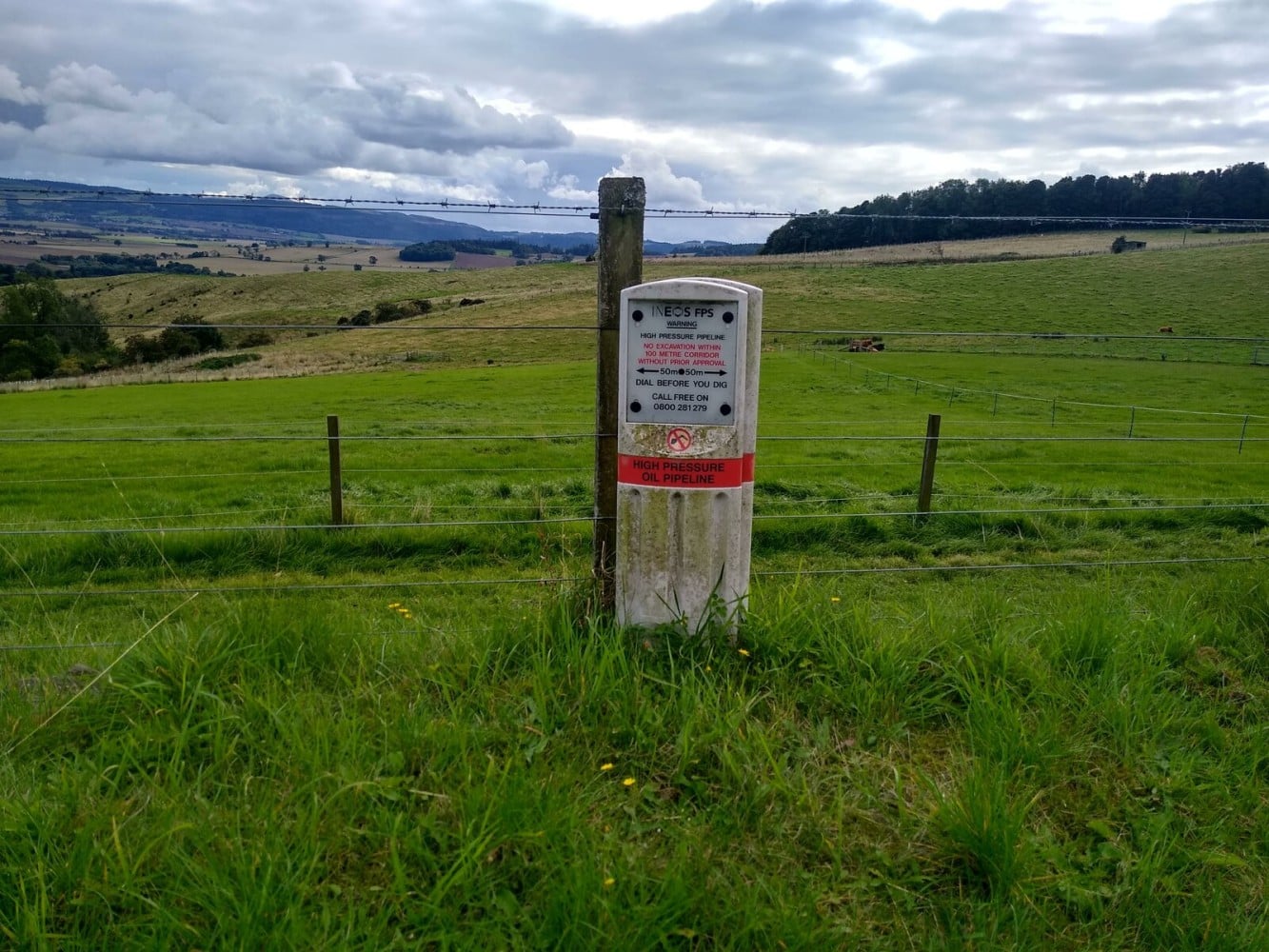
Joly agreed with Langenbrunner during a conversation with oil and gas project managers, saying the work can involve looking for proxies. The team might scan satellite data for compression stations or scars on the landscape to infer where a pipeline is underground. Then the data can be coded and added to interactive dashboards and maps, analyzed for trends, and shared widely via downloads under GEM’s Creative Commons Attribution 4.0 International Public License.
“Our location data and mapping work are hugely resource intensive, but they’re critical for our partners and data users. And while it’s often overlooked, these data form the resource that people want as soon as there’s a global crisis.” - Julie Joly, Oil & Gas Program Director
Open information when it’s needed most
Demand for trustworthy oil and gas data becomes especially visible during periods of geopolitical instability and energy market disruption. During recent volatility tied to tensions involving the Iran war and shipping disruptions in the Strait of Hormuz, Rob Rozansky and colleagues released a report highlighting the hidden economic and energy-security risks associated with liquefied natural gas (LNG) dependence.
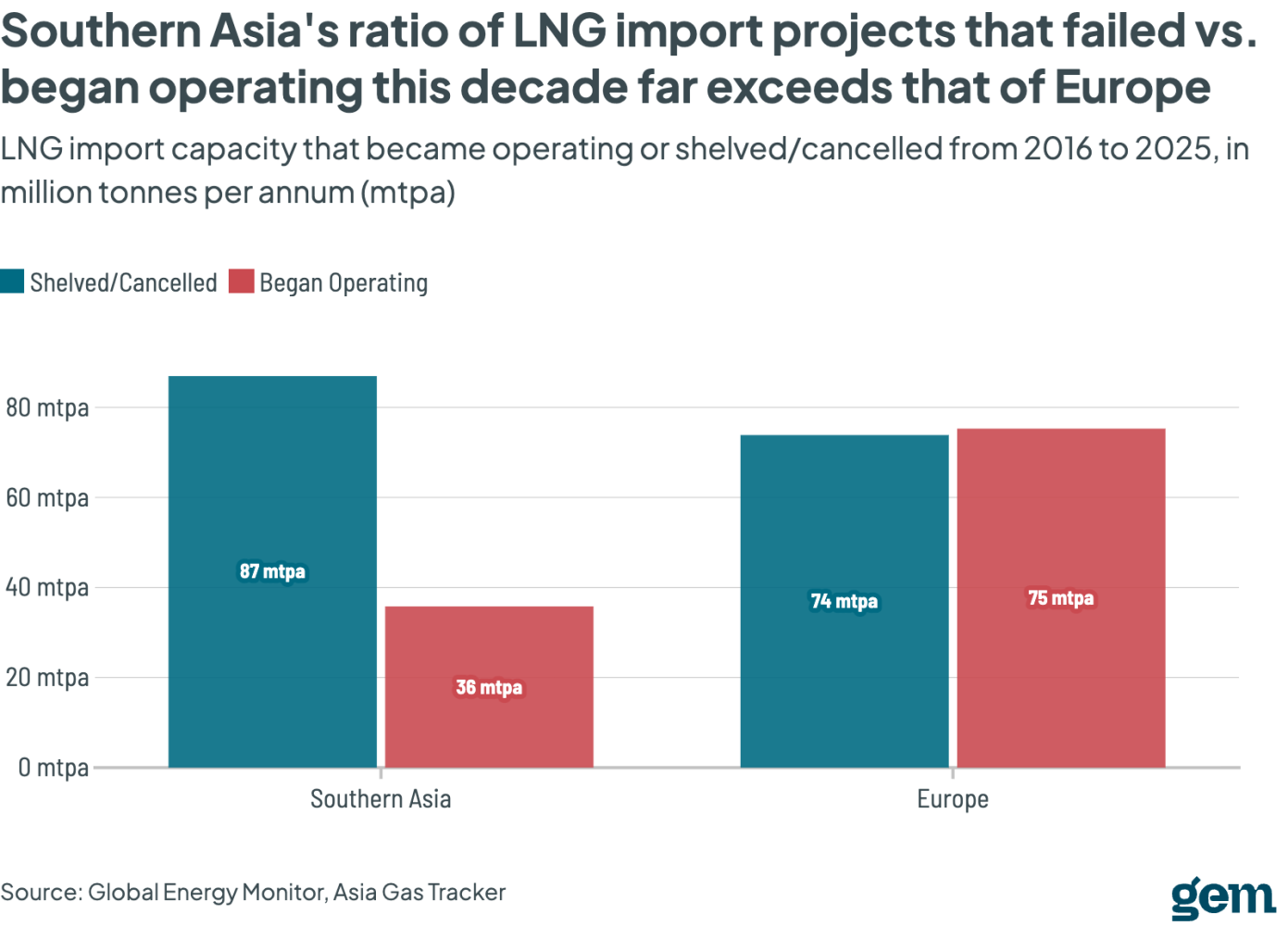
The team based its findings on data from GEM’s oil and gas trackers, citing that LNG terminals and gas pipelines in development in Southern Asia total US$107 billion in potential investment. Even before the recent market disruptions, it was unclear how much would actually get built; over the last ten years, the major gas importers of Southern Asia — India, Bangladesh, and Pakistan — have shelved or cancelled two to three times as much proposed LNG import capacity as they brought online. High oil and gas prices are likely to pour even more cold water on these plans.
Journalists and researchers have increasingly turned to GEM for insights and technical support during periods of instability particularly as the war in Iran continues. One Belgian reporter requested a GeoJSON file, in order to map the Saudi East-West crude oil pipeline for a news article. Global Coal Plant Tracker Project Manager, Christine Shearer, was interviewed by the Financial Times for an article about theIran war and the energy transition. To better serve our users, project managers of GEM's extraction and infrastructure trackers also produced a map of relevant infrastructure across Gulf states, including digitized records of field outlines, pipeline routes, and refinery locations for use in analysis and storytelling by journalists.
Pivoting as the landscape changes
In an energy sector that moves as quickly as oil and gas, it’s important to be able to identify trends early and adapt approaches to keep datasets relevant. The oil and gas team has found that annual or biannual updates of each tracker allow it to stay on top of short-term surges in development and capture how multi-year projects are developing.
One recent example was GEM’s stunning finding that the U.S. now leads the world in new gas plants in development. Jenny Martos, Project Manager of the Global Oil and Gas Plant Tracker, noticed a couple years ago that the U.S. was climbing from being among the top ten to rivaling China at the very top. The AI data center boom accelerated that trend, and the U.S. now accounts for roughly one-quarter of all gas-fired power capacity in the announced, pre-construction, and construction phases.
GEM’s report, published in January, drew significant international attention and has been cited in at least 226 articles across 27 countries. Martos was interviewed by NPR’s Marketplace among other news outlets.
To the GEM researchers and analysts, however, the trend had been visible long before it became widely recognized.
“It takes a while for the data to catch up,” Martos explained. “You see a trend before you can prove it.”
“We were well ahead of the curve on hydrogen several years ago,” Joly noted. “So we started tracking projects described as ‘hydrogen ready.’ And we pushed the conversation regarding the fact that the amount of hydrogen required to meet the need of all supposedly hydrogen-ready projects could not possibly be met by green hydrogen. Green hydrogen is still such a small part of the market that most of these projects would still end up being gas based. Nobody knew what we were talking about when we started, but eventually the subject rose to prominence, and we were already well positioned to contribute to the conversation.”
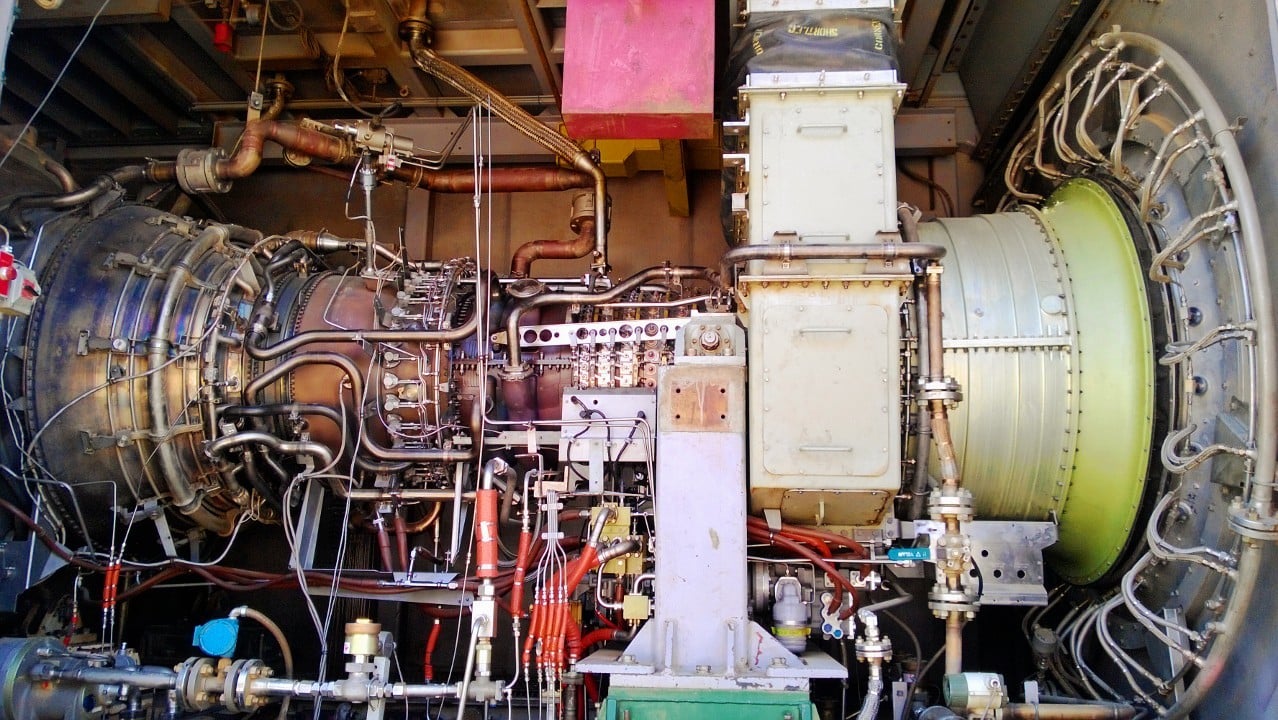
An LM6000 gas turbine operating for the Ministry of Electricity of Iraq. Photo from Wikimedia Commons.
It’s important to note that not all plants in production or planning will ultimately get built. Remember the zombie projects? Bottlenecks in gas turbine manufacturing capacity, material costs, and labor supply are delaying gas power expansion globally. According to GEM data, two-thirds of projects currently in development do not yet have a named turbine manufacturer, potentially limiting the scale of future gas power expansion.
The data also show increasing delays in oil and gas field development timelines. A report published in March 2026 by Scott Zimmerman and Hanna Fralikhina, who work on GEM’s Global Oil and Gas Extraction Tracker (GOGET), found that oil and gas fields now take roughly three times as long to come online compared to the period 1960–1980, when the majority of the world's top producing fields were discovered. That represents an increase of over ten years. Analysis of GOGET data suggests that the remaining stock of new oil and gas projects is more technically difficult, and even dangerous, to develop, making investment in a decarbonized future more attractive by comparison.
Furthermore, domestic supply doesn’t inherently guarantee energy security. There’s an oft-cited argument that a country should build out its fossil fuel supply to avoid dependence on geopolitical rivals. But oil price shocks tied to the Iran conflict illustrate how deeply global markets shape the industry regardless of where supply originates. Countries that heavily expand domestic production may still remain exposed to global price volatility while also risking over-investment and future stranded assets.
GEM data in the world
GEM staff are not the only people interpreting the data and communicating them to broader audiences. Every day, users around the world rely on GEM’s oil and gas data for their comprehensiveness, reliability and accessibility. Over the past year alone, GEM’s oil and gas datasets have been downloaded 9,760 times — an average of about 27 downloads per day. Users then analyze the data and work them into policy briefs, campaign literature, academic publications, speeches, advocacy campaigns, news articles, and many other applications.
The U.S. Energy Information Administration (EIA) cited GEM’s Global Gas Infrastructure Tracker in a brief on LNG imports in Brazil. Data from the Global Gas Extraction Tracker supported the World Inequality Lab’s research for its Climate Inequality Report 2025. Beyond Fossil Fuels used the Global Oil and Gas Plant Tracker to inform their campaign materials for Siemens’ Annual General Meeting. Campaigners relied on GEM’s verifiable data to emphasize that a new wave of gas plant development driven by energy-intensive AI data centers risks locking Europe into fossil fuel dependence, in contradiction to the company’s sustainability plans.
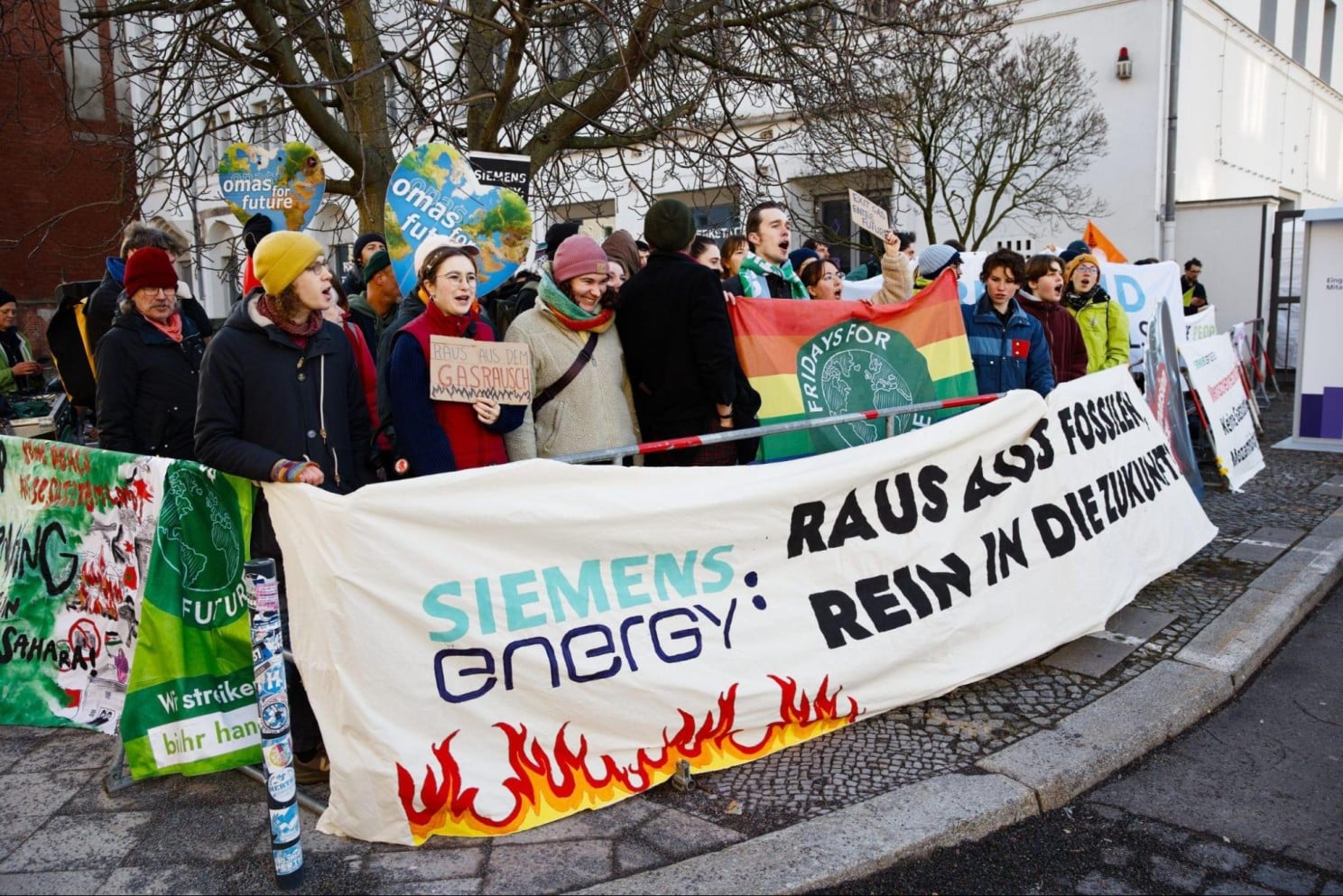
GEM data help provide clarity when public narratives around oil and gas become contradictory or opaque. Alyssa Moore, Project Manager of GEM’s Global Gas Finance Tracker, explained that competing narratives around whether business is booming or slowing down can be tempered by open, verifiable data: “The future of new oil and gas projects and their financing is volatile. It’s vital that we have finance data, because this field is so opaque. Transparency is important so stakeholders on the ground can be informed and participate.”
To stay informed about GEM’s data releases and analysis on the oil and gas sector, as well as other energy sectors, subscribe to our newsletters. You can also consider supporting GEM’s commitment to open-access energy data with a donation.