country/areas included
bioenergy power units
gigawatts operating capacity
gigawatts prospective capacity
Overview
The Global Bioenergy Power Tracker (GBPT) covers growth in the combustion sector, including co-firing with fossil fuels.
The Global Bioenergy Power Tracker shows that global bioenergy power plants are growing but are a false solution in the global transition to renewable energy and threaten climate goals and human health.
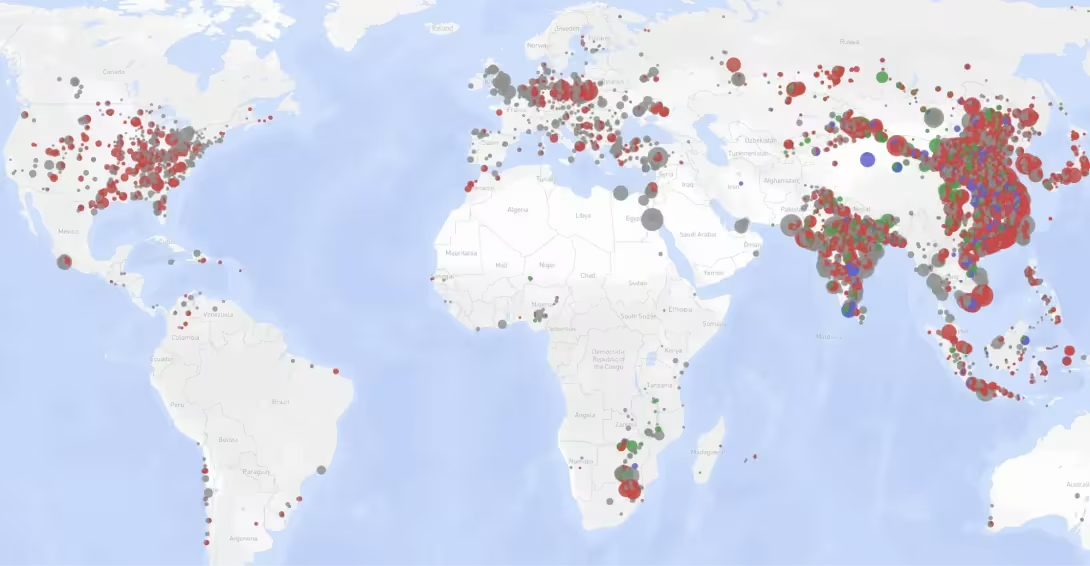
As of 2025, the GBPT identifies more than 4,500 operating and prospective power units worldwide. If all prospective projects came to fruition, there would be 135 gigawatts (GW) of bioenergy coming from the combustion of various fuel types, including woody biomass, refuse, and agricultural waste. While China dominates the operating and prospective bioenergy power capacity — holding just over 30% of each — notable buildouts are occurring in Brazil, Japan, the UK, Vietnam, India, Sweden, Thailand, South Korea, and Australia. GEM’s bioenergy power plant data paint a picture of a sector growing steadily across the globe, despite numerous health, environmental, and financial viability concerns.
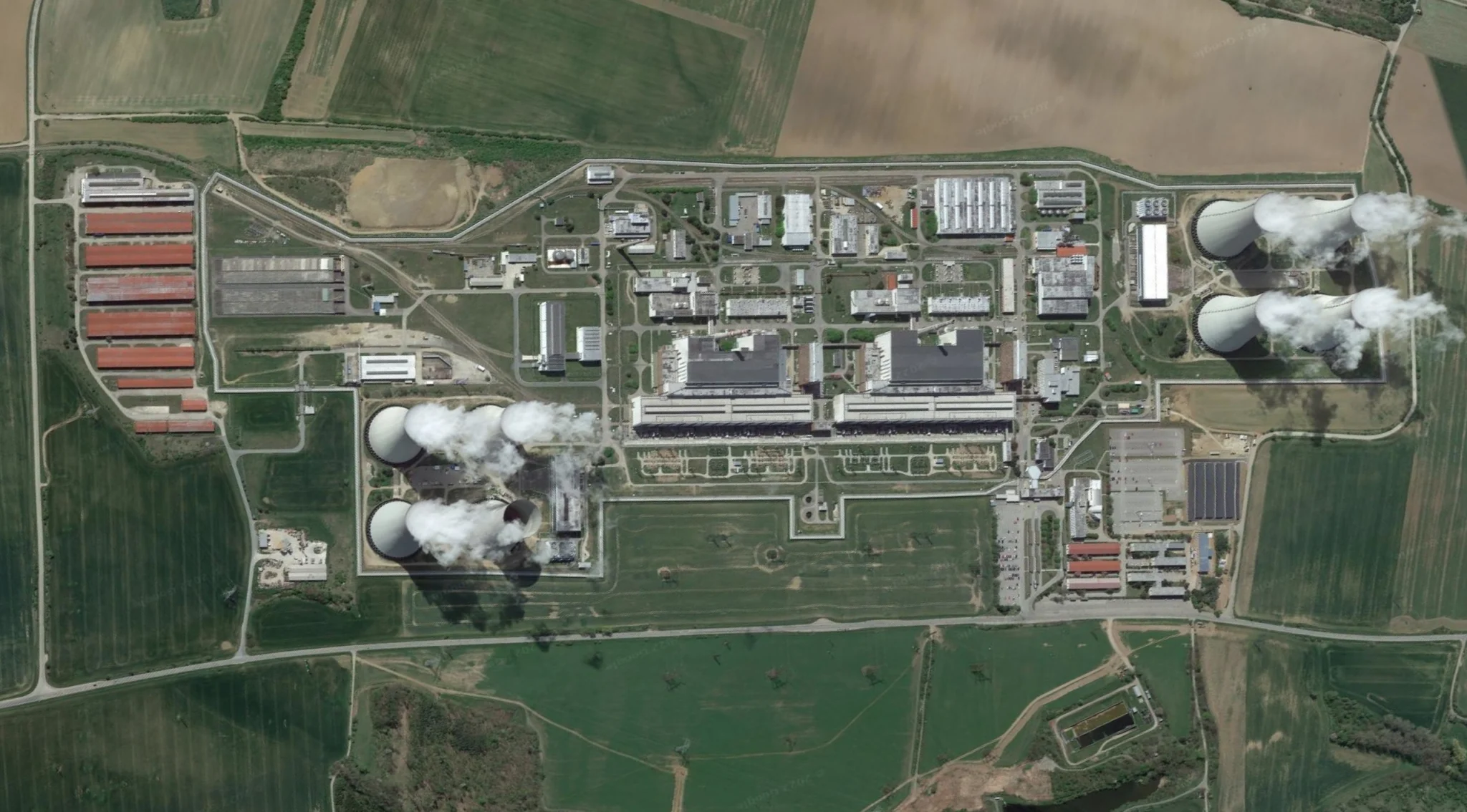
New bioenergy combustion units are frequently presented as a “green” alternative, and many countries offer renewable energy credits. However, the greenwashing of utility-scale bioenergy combustion is a distraction from ongoing and necessary investment into wind and solar. The biggest offender is woody biomass combustion, which may be co-fired with coal to extend the life of a coal unit, has low energy efficiency, presents a hazard to human health, and frequently sources wood from delicate forest ecosystems. The geospatial data in the GBPT highlight the human health concerns of emissions from bioenergy combusting plants, especially for refuse combustion near highly-populated areas.
China has more than 6 GW of bioenergy power in development.
More than 1,100 units combust some woody biomass.

Methodology
Global Energy Monitor’s Global Bioenergy Power Tracker uses a two-level system for organizing information, consisting of both a database and wiki pages with further information. The database tracks individual bioenergy power units and includes information such as project owner, status, and location. A wiki page for each facility is created within the Global Energy Monitor wiki. The database and wiki pages are updated annually.
Announced: Proposed projects that have been described in corporate or government plans but have not yet taken concrete steps such as applying for permits.
Pre-construction: Projects that are actively moving forward in seeking governmental approvals, land rights, or financing.
Construction: Site preparation and equipment installation are underway.
Operating: The project has been formally commissioned; commercial operation has begun.
Shelved: Suspension of the project operation has been announced.
Shelved – inferred 2 y: The project is inferred to be shelved because, or no progress has been observed for at least two years.
Cancelled: A cancellation announcement has been made.
Cancelled – inferred 4 y: The project is inferred to be cancelled because, or no progress has been observed for at least four years.
Retired: The project has been decommissioned.
Mothballed: The project is disused, but not dismantled.
The Global Bioenergy Power Tracker data set draws on various public data sources, including:
- Government data on individual bioenergy power facilities (such as the U.S. EIA 860 Electric Generator Inventory), country energy and resource plans, and government websites tracking bioenergy power facility permits and applications;
- Reports by power companies (both state-owned and private);
- News and media reports;
- Non–governmental organizations tracking bioenergy power facilities or permits (such as Trend Asia, Mighty Earth, South Korea For Our Climate, Friends of the Earth Japan, and the Environmental Paper Network).
A partial list of data sources can be found here.
For each bioenergy power station, a wiki page is created on Global Energy Monitor’s wiki. Under standard wiki convention, all information is linked to a publicly-accessible published reference, such as a news article, company or government report, or a regulatory permit. In order to ensure data integrity in the open-access wiki environment, Global Energy Monitor researchers review all edits of project wiki pages.
September 2025
- This update covers all regions of the globe, and uses the United Nations’ Statistics Division definitions of region and subregion.
- This update includes lowering the global threshold to 20 MW, with information on units below the capacity threshold when readily available
- Many countries now include power stations between 10-20 MW.
- “Bio-heavy oil” was added as a fuel type.
- New columns include: “Operator(s) GEM Entity ID”, “Owner(s) GEM Entity ID”, “Parent(s)”, and “Parent(s) GEM Entity ID”. For more information on ownership please see the Global Energy Ownership Tracker.
- Change in capitalization of column headers including: “Unit conversion year” to “Unit Conversion Year”
- The dataset now puts any below threshold projects into one “Data” tab instead of separating them.
September 2024
- This update covers all regions of the globe, and uses the United Nations’ Statistics Division definitions of region and subregion.
- Some units below the 30 MW global threshold are provided for some countries when the data was readily available.
- South Korean data was collected in collaboration with South Korea For Our Climate
- Japanese data was collected in collaboration with Friends of the Earth Japan
- Below 30 MW data was collected for countries including South Korea, Japan, Colombia, China, the Dominican Republic, and Bahrain.
- The September 2024 release includes the change from the column name “Country” to “Country/Area”. The Country/Area column presents energy data within various economic contexts, and the geographical unit does not strictly follow political boundaries.
- Subnational location names for China have been standardized.
- A new data field has been added to indicate when a project phase is slated for hydrogen production.
- GEM ID formats have changed from an L2+5 digit number to L1+11 digit number for location IDs and a G2+5 digit number to a G1+11 digit number. Previous GEM ID numbers have been preserved. For example, a previous GEM ID of L212345 is now L100000812345
- Shelved and cancelled statuses have been broken down into two subcategories depending on if there was an announcement of delay or cancellation, or if the status is inferred by lack of observed progress.
- Change in capitalization of column headers including: “Project name” to “Project Name, “Unit name” to “Unit Name”, “Project name in local language / script” to “Project Name in Local Language / Script”, “Other name(s)” to “Other Name(s), “Location accuracy” to “Location Accuracy”, “Retired year” to “Retired Year”, “Local area (taluk, county)” to “Local Area (taluk, county)”, “Major area (prefecture, district)” to “Major Area (prefecture, district)”, “GEM location ID” to “GEM Location ID”, and “GEM phase ID” to “GEM Phase ID”
- Change in column header from “Operating status” to “Status”, “Operator” to “Operator(s)”, “Operator name in local language / script” to “Operator Name(s) in Local Language / Script”, “Owner” to “Owner(s)”, “Owner name in local language / script” to “Owner Name(s) in Local Language / Script”, “Unit start year” to “Start Year”
- Fuel types are now in the Fuel column separated by semicolons.
November 2023
- This update covers all regions of the globe, and uses the United Nations’ Statistics Division definitions of region and subregion.
- Some units below the 30 MW global threshold are provided for some countries when the data were readily available.
- Whereas the January 2023 release only included units located at power stations that do not burn or co-fire with non-bioenergy sources, this release includes units that cofire bioenergy fuel sources alongside other types of fuel, as well as units that burn bioenergy fuel sources at power stations with other units that burn other types of fuel.
- Whereas the January 2023 release only included a “Start year” column, the November 2023 release now includes a “Unit conversion year” column as well as a “Unit start year” column. The November 2023 release “Unit start year” column replaces the January 2023 release’s “Start year” column.
- The November 2023 release includes a “Date last researched” column. This is a new addition to the tracker.
- The November 2023 release includes some case changes to the column headers in the downloadable dataset.
January 2023
Global Energy Monitor releases the first version of the Global Bioenergy Power Tracker.
To allow easy public access to the results, Global Energy Monitor worked with Earth Genome to develop a map-based and table-based interface. In the case of exact coordinates, locations have been visually determined using Google Maps, Google Earth, Wikimapia, or OpenStreetMap. Exact locations for proposed projects, if available, are obtained from sources such as permit applications, other government documentation, or company reports. If the location of a project or proposal is not known, Global Energy Monitor identifies the most accurate location possible based on available information.
The Global Bioenergy Power Tracker tracks utility-scale bioenergy power station units with capacities of 10 megawatts (MW) or more globally. The tracker includes every bioenergy unit at the 20 MW capacity threshold for operating, announced, pre-construction and in-construction power station units. In some cases, units may combust multiple fuel sources in addition to bioenergy. The tracker’s definition of bioenergy draws from the chapter “Bioenergy” in the IPCC Special Report on Renewable Energy Sources and Climate Change Mitigation (2011).
Frequently Asked Questions
The Global Bioenergy Power Tracker tracks utility-scale bioenergy power station units with capacities of 10 megawatts (MW) or more globally. The tracker includes every bioenergy unit at the 20 MW capacity threshold for operating, announced, pre-construction and in-construction power station units. When readily available, units below 10 MW are included, please see the annual release methodology notes for more details. In some cases, units may combust multiple fuel sources in addition to bioenergy. The tracker’s definition of bioenergy draws from the chapter “Bioenergy” in the IPCC Special Report on Renewable Energy Sources and Climate Change Mitigation (2011).
Capacity is measured in megawatts, and refers to the collective nameplate capacity of the project.
The collection of physical infrastructure that necessarily operates together is defined as a unit. Power stations can consist of one or more units, which may be built and commissioned at nearly the same time or at different times.
The tracker includes coal or gas plants that have announced plans to convert, or are in the process of switching, from coal or gas to bioenergy as a fuel source. These conversions are added as “announced,” “pre-construction” or “construction” in the tracker until the conversion is completed, at which point the status will be changed to “operating.”
Contact
For questions about the Global Bioenergy Power Tracker, contact Sophia Bauer: