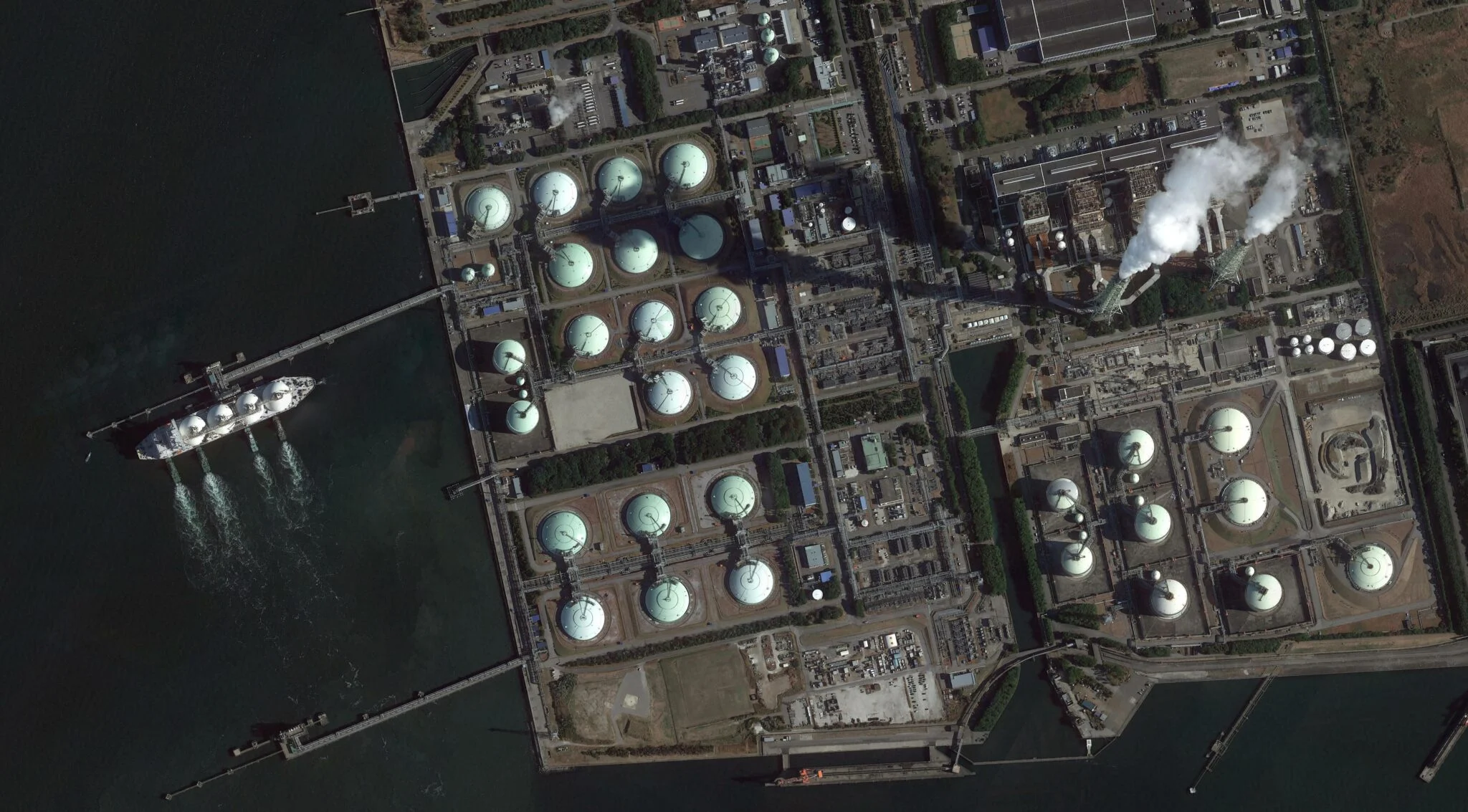
million tonnes per annum in-development LNG capacity
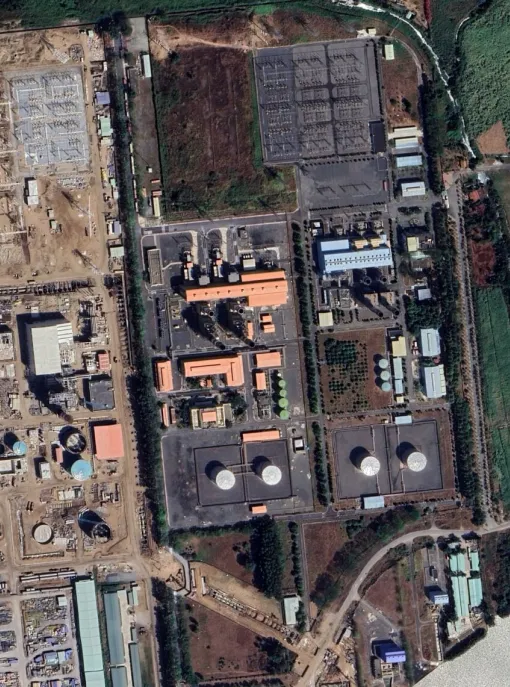
gigawatts in-development gas capacity
known project financing for LNG and gas
Overview
Project-specific finance is a critical piece of the fossil finance landscape, with domestic and international financiers pushing gas expansion. However, market and political shifts are slowing some final investment decisions.
Project-specific finance for liquefied natural gas (LNG) terminals and gas-fired power plants is an opaque but critical factor in the fossil finance landscape. While finance and reporting structures differ heavily by country, equity investment, debt investment via loans or bonds, and in particular the announcement of a final investment decision (FID) indicate concrete movement of a fossil gas project towards construction and completion, while delays in financing can indicate a project’s vulnerability.
In South, East, and Southeast Asia, a survey of the state of project finance for in-development infrastructure reveals high involvement of domestic financiers as well as international investment. State investment plays a key role in the development of many gas-fired power plants, as in Vietnam and Taiwan. Political and market instability has resulted in many projects becoming indefinitely stalled or shelved, as in Bangladesh and Myanmar.
In Australia, most gas and LNG projects remain in early stages, with financial futures uncertain outside of some Australian government and commercial bank funding. On the North American front, financing from Mexico’s Federal Electricity Commission (CFE) is driving gas-fired power plant expansion, while, in Canada, a significant percentage of planned buildout is proposed captive power for AI data centers. Both Mexican and Canadian LNG terminals, while slow to progress, have seen significant private investment, with some Mexican LNG export terminals projected to supply to Southeast Asia.
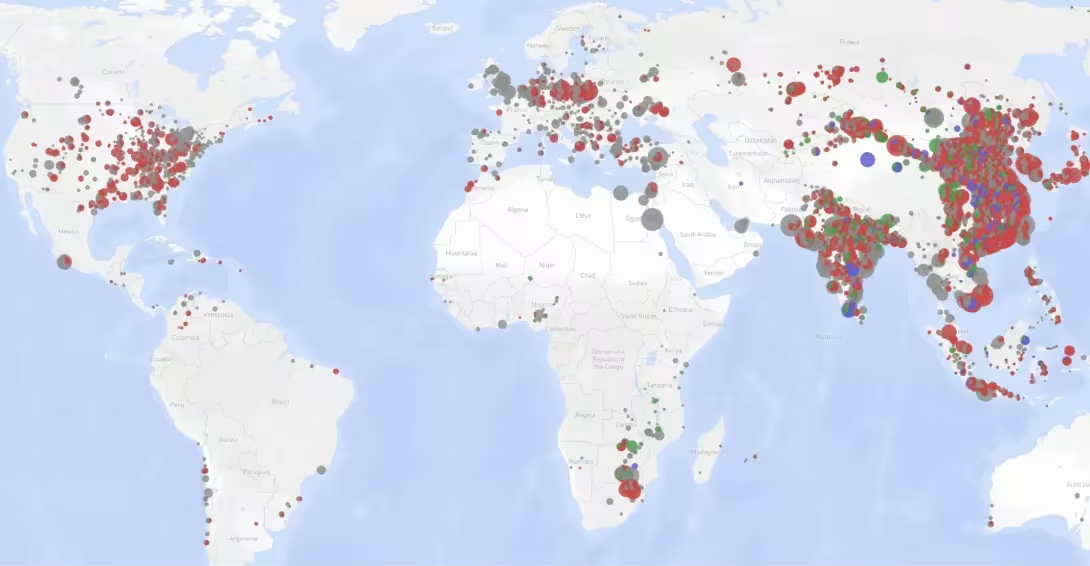
Within our study countries, 31% of in-development fossil gas projects have achieved known project financing.
A significant percentage of projects face delays and cancellations due to market and political factors.

Methodology
The Gas Finance Tracker tracks all in-development/pre-operational LNG terminals and gas-fired power plants in our target countries, down to the unit level. For the September 2025 release, a list of in-development units was compiled in January 2025. For the additional countries included in the December 2025 release, a list of in-development LNG projects was compiled in June 2025, and a list of in-development gas power projects was compiled in October 2025. As a result, a few projects which began operating during the research period may still be marked as in development.
For the purposes of the Global Gas Finance Tracker, we use the term “project finance” to refer to any finance specifically earmarked for a particular energy project. In its traditional definition, the term “project finance” typically refers to a specific structured-finance approach in which a special-purpose vehicle (SPV) is created to develop a particular project and enters into all major project and financing agreements for that project—for example, the Philippines’ Atimonan One Energy is the SPV providing project finance for the Atimonan power station. However, this narrow interpretation obscures the wide variety of actors behind the fossil fuel build-out. We broaden our definition of “project finance” to include all project-specific debt and equity financing provided to the project. Additionally, since SPVs are more commonly used for large, multibillion dollar projects such as LNG terminals, and less commonly for other types of energy infrastructure, expanding our definition of project finance beyond its traditional limits allows us to capture a larger portion of the fossil finance landscape.
To avoid creating potential false linkages between third parties and specific projects, the tracker excludes any financing that is not directly and publicly designated for a particular project (e.g., Bank A provides $100 million in financing to Company B, but it’s unclear which specific mCompany B projects the finance was used for, if any). Where a financier is known to have financed a specific project, but the financing amount is unclear (e.g., Bank A provides $100 million in financing to 3 specific Company B projects, but doesn’t specify how much financing was provided to each), we provide only the financier name.
Additionally, where specific finance information cannot be publicly disclosed, names of financiers and the total known investment amount are given in aggregate, without separating out individual investment amounts per financier. Alternatively, names of single financiers may also be included without investment amount attached.
- Announced: Gas plants only. Projects that have been publicly reported but have not yet moved actively forward by applying for permits or seeking land, material, or financing.
- Pre-construction: Gas plants only. Projects that are actively moving forward in seeking governmental approvals, land rights, or financing.
- Proposed: LNG terminals only. A company or government has proposed a project.
- Construction: Site preparation, equipment installation, and/or major construction are underway.
- Shelved/Shelved-inferred: Suspension of development has been announced, or no progress has been observed for at least two years. In the case of LNG terminals, this status is also used for projects that have not begun operations over two years after construction was completed.
- Idle: LNG terminals only. The project was at one time operational and now sits unused, but has not been formally mothballed.
For the purposes of the GGFT, projects in any of the above categories are considered “in-development.” Due to the timing of research cycles, the tracker may contain a handful of projects that have since moved to “operating” status (the project has been formally commissioned; commercial operation has begun).
An initial list of in-development LNG terminal and gas power projects was compiled from GEM’s existing Global Gas Infrastructure Tracker and Global Oil and Gas Plant Tracker, as well as media coverage of any additional, newly announced projects. The Gas Finance Tracker project then gathered financial data from media coverage of financial deals for LNG terminals and gas-fired power stations, government and NGO reports, and financial databases, including IJGlobal. Wherever possible, the information in the tracker has been verified by researchers familiar with particular countries.
Missing finance data may be due to the status of a project. For example, very early status projects may not have yet achieved financing, and shelved or cancelled projects may have no financing to report.
GEM and the Gas Finance Tracker team are grateful for data support, resources, and knowledge sharing from Rainforest Action Network, Reclaim Finance, Stand.earth, and Urgewald.
Frequently asked questions
Please fill out an error report here.
The tracker was designed and produced by Global Energy Monitor.
The project manager is Alyssa Moore.
Please refer to the Download Data section for citation guidance.
Contact
For questions about the Global Gas Finance Tracker, contact Alyssa Moore: