country/areas included
nuclear units tracked
gigawatts operating capacity
gigawatts prospective capacity
Overview
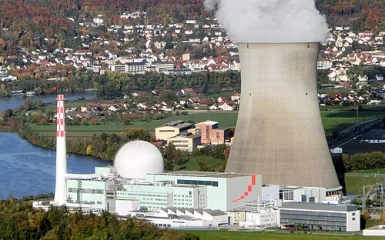
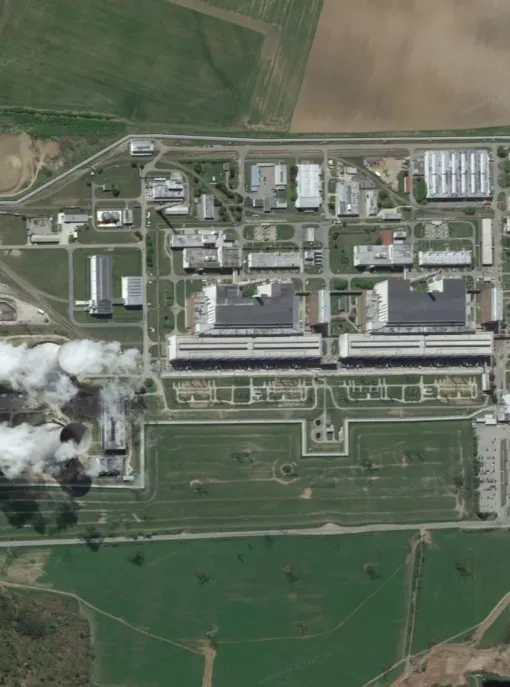
The Global Nuclear Power Tracker is a comprehensive dataset providing insights into nuclear power throughout its history and across all statuses and geographies.
It tracks ~1,750 nuclear power units across all statuses, including operating, retired, prospective, and cancelled. While many sources focus on currently operating or historical plants, the GNPT reveals the full scope of all nuclear proposals ever announced, spanning over 1,500 gigawatts (GW) of total capacity, with cancellations alone representing 40%. This dataset covers the complete history of nuclear power around the world, from the first experimental power reactors whose construction began in the 1940s to modern plans for small modular reactors. The GNPT tracks buildouts, delays, and status changes across eight decades, illuminating critical patterns in deployment timelines relevant to long-term energy planning.
Historically, more proposed nuclear units have been cancelled than completed. 566 GW of nuclear power were cancelled before coming online, a trend driven by extended timelines, cost overruns, regulatory hurdles, or shifting energy priorities. While 538 GW of nuclear power have been operational at some point in time, the world’s operating fleet as of 2026 stands at ~401 GW across ~421 reactors, with another 81 GW under construction and 282 GW in earlier stages of development.
As governments, businesses, and civil society groups pursue climate and decarbonization goals amid rising electricity demand from data centers and AI, nuclear power remains under discussion as a low-carbon source of baseload electricity. Yet, its delivery challenges and attrition record continue to shape investment and policy choices. By mapping the history of nuclear power over time and across geographies, the GNPT helps business leaders, policymakers, researchers, and market participants assess its full history and future outlook.
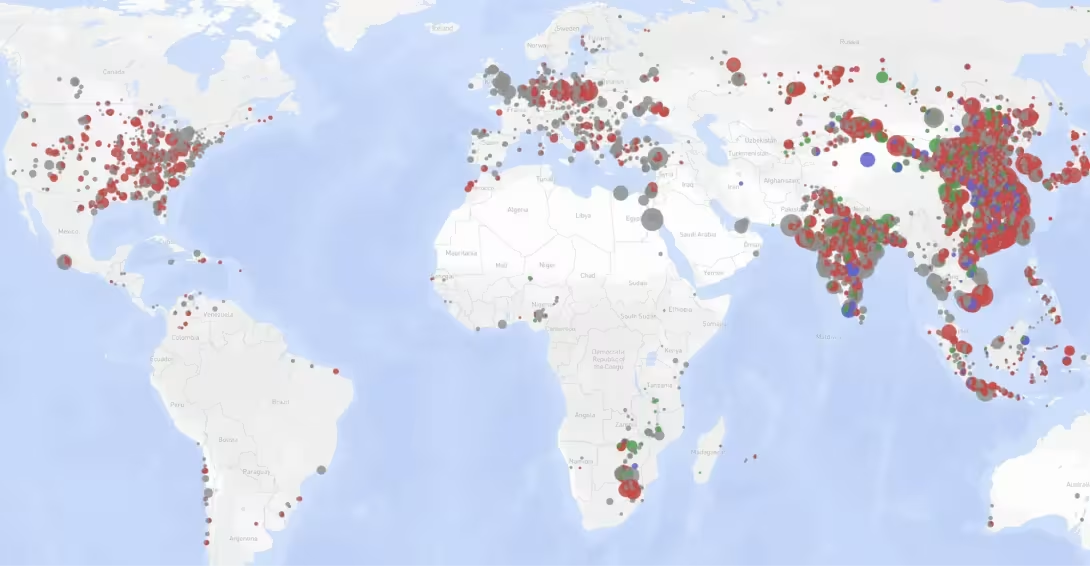
About half the world’s prospective nuclear units are located in China, the U.S., and Poland.
Three countries — the U.S., France, and China — have nearly 60% of global operational nuclear capacity.
Methodology
Global Energy Monitor’s Global Nuclear Power Tracker uses a two-level system for organizing information, consisting of both a database and wiki pages with further information. The database tracks individual nuclear power plant units and includes information such as project owner, status, reactor type, and location. A wiki page for each project is created within the Global Energy Monitor wiki. The database and wiki pages are updated annually.
Announced: The unit has been described in corporate or government plans but concrete steps such as applying for permits have not yet been taken.
Pre-construction: The unit is actively moving forward in seeking governmental approvals, land rights, or financing.
Construction: The unit has site preparation and equipment installation underway.
Operating: The unit has been formally commissioned; commercial operation has begun.
Shelved: Unit suspension has been announced.
Shelved – inferred 2 y: The unit is inferred to be shelved because no progress has been observed for at least two years.
Cancelled: A cancellation announcement for the unit has been made.
Cancelled – inferred 4 y: The unit is inferred to be cancelled because no progress has been observed for at least four years.
Mothballed: The project is disused, but not dismantled.
Retired: The unit has been decommissioned.
The Global Nuclear Power Tracker data set draws on various public data sources, including:
- Industry data on individual nuclear power units
- Government websites tracking project permits and applications
- Reports by power companies (both state-owned and private)
- News and media reports
- Local non-governmental organizations tracking nuclear projects or permits
A list of major data sources can be found here.
Global Energy Monitor researchers perform data validation by comparing GEM’s dataset against proprietary and public data such as S&P Global’s World Electric Power Plant Database (WEPP) and the World Resource Institute’s Global Power Plant Database, as well as various company and government sources.
For each nuclear power project, a wiki page is created on Global Energy Monitor’s wiki. Under standard wiki convention, all information is linked to a publicly-accessible published reference, such as a news article, company or government report, or a regulatory permit. In order to ensure data integrity in the open-access wiki environment, Global Energy Monitor researchers review all edits of project wiki pages.
To allow easy public access to the results, Global Energy Monitor worked with Earth Genome to develop a map-based and table-based interface. In the case of exact coordinates, locations have been visually determined using Google Maps, Google Earth, Wikimapia, or OpenStreetMap. Exact locations for proposed projects, if available, are obtained from sources such as permit applications, other government documentation, or company reports. If the location of a project or proposal is not known, Global Energy Monitor identifies the most accurate location possible based on available information.
September 2025
- This is the fourth release of the Global Nuclear Power Tracker dataset. Previous releases were in January 2023, October 2023, and July 2024.
- This update covers all regions of the globe, and uses the United Nations’ Statistics Division definitions of region and subregion.
- All prospective projects have been re-researched for recent updates. Newly announced projects and those with revised or new information have been incorporated.
- A new technology type of “microreactor” has been added to the data.
July 2024
- This update covers all regions of the globe, and uses the United Nations’ Statistics Division definitions of region and subregion.
- The column name “Country” has been changed to “Country/Area”. The Country/Area column presents energy data within various economic contexts, and the geographical unit does not strictly follow political boundaries.
- GEM ID formats have changed from an L7+5 digit number to L1+11 digit number for location IDs and a G7+5 digit number to a G1+11 digit number. Previous GEM ID numbers have been preserved. For example, a previous GEM ID of L500064 is now L100000500064.
- Shelved and cancelled statuses have been broken down into two subcategories depending on if there was an announcement of delay or cancellation, or if the status is inferred by lack of observed progress.
October 2023
- All countries have been researched for this update.
- The Global Nuclear Power Tracker now includes nuclear power units with a status of “cancelled”, representing over 500 GW of tracked capacity worldwide, as well as the data attribute “Cancellation Year”.
January 2023
- Global Energy Monitor releases the first version of the Global Nuclear Power Tracker.
- All global regions have been researched for this data release.
- Global Energy Monitor has transitioned to using the United Nations’ region and subregion definitions.
- The Global Nuclear Power Tracker has replaced the word “development” in the status domain with the term “pre-construction” to support consistent language across all of Global Energy Monitor’s trackers. The definition of “pre-construction” is consistent with the tracker’s previous definition of “development.”
- Global Energy Monitor has adopted the name “Türkiye” as a replacement for “Turkey.”
Frequently Asked Questions
The tracker catalogs every nuclear power plant unit of any capacity and of any status, including operating, announced, pre-construction, under construction, shelved, cancelled, mothballed, or retired.
Capacity is measured in megawatts, and refers to the collective nameplate capacity of the nuclear power plant unit.
The collection of physical infrastructure that necessarily operates together is defined as a unit. In the case of nuclear power, a unit consists of a nuclear reactor used as a heat source; the heat ultimately is used to drive a steam turbine connected to a generator, producing electricity.
Nuclear plants or projects can consist of one or more units, which may be built and commissioned at nearly the same time or at different times.
No, the tracker focuses exclusively on fission power plants and does not cover fusion projects, as their technological principles differ significantly and fusion remains a distinct, emerging field.
Please fill out an error report here.
The tracker was designed and produced by Global Energy Monitor, a network of researchers seeking to develop collaborative informational resources on fossil fuel impacts and alternatives.
Contact
For questions about the Global Nuclear Power Tracker, contact Joe Bernardi: