country/areas included
cement plants tracked
tonnes annual cement capacity
tonnes annual clinker capacity
Overview
Global Energy Monitor's Global Cement and Concrete Tracker (GCCT) tracks cement and clinker plants around the world, revealing capacity distribution, production methods, and pathways for reducing emissions from clinker production.
The Global Cement and Concrete Tracker (GCCT) provides information on global integrated and grinding plants, including all plants that have been proposed or under construction since 2018 and retired or mothballed since 2021. The GCCT provides asset-level data on location, ownership, operating status, annual clinker and cement capacity, and production methods including relevant green cement technology.
Integrated cement plants consist of multiple units, centered around kilns for clinker production and grinding mills to produce finished cement. Grinding plants consist only of grinding mills, with no clinker producing capacity. Clinker, the binding element of cement, is typically produced through coal- or oil-fueled combustion due to high heat requirements (1,500°C), which necessitates the use of high-carbon fuels. The GCCT does not capture the historic capacity of all units that have been retired or mothballed within operating plants beyond the dates outlined above. Each plant included in the tracker is linked to a wiki page on GEM.wiki that provides additional details.
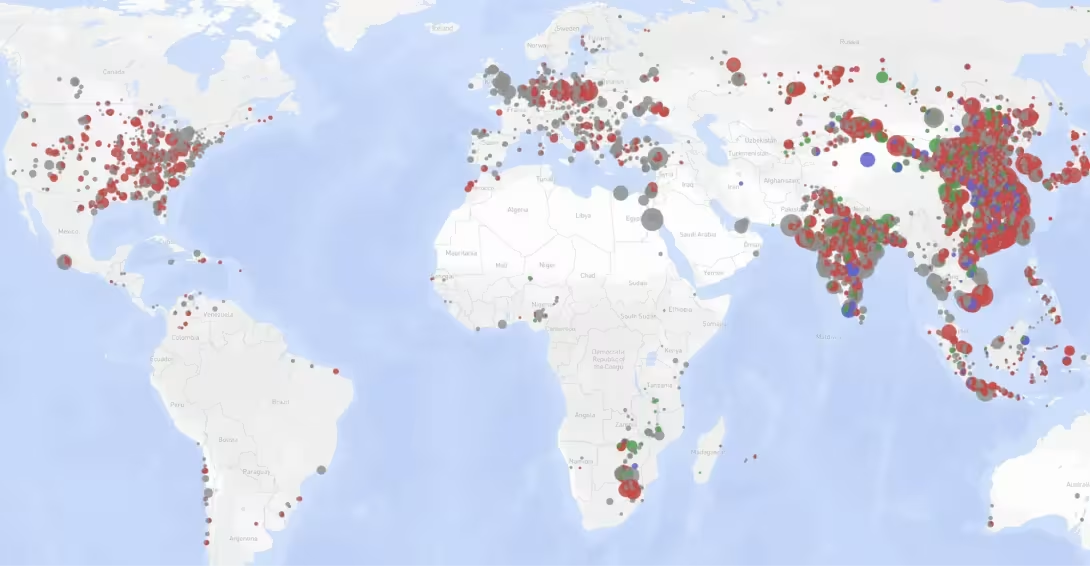
China (45%) and India (12%) together account for over half of global operating clinker capacity
India accounts for over 25% of all new cement capacity in development globally
What's inside?
Methodology
Global Energy Monitor’s Global Cement and Concrete Tracker uses a two-level system for organizing information, consisting of both a database and wiki pages with further information. The database tracks individual integrated, grinding, and clinker only production plants and includes information such as plant owner, location, operating status, cement production method, cement and clinker capacity, and emission reduction strategies. A wiki page for each plant is created within GEM.wiki, and contains more detailed, footnoted information such as plant history and ESJ issues.
A preliminary list of cement plants in each country/area was gathered from public and private data sources including Spatial Finance Initiative’s Global Database of Cement Production Assets and LeadIT’s Green Cement Technology Tracker, and data from CemNet, Global Cement, The Global Cement and Concrete Association, and United States Geological Survey, as well as various company and government sources. Data for proposed cement plants was gathered from company announcements, press releases, and government permits, and includes global coverage of cement plants proposed as of May 1, 2025. The data was then vetted against additional sources of information, listed below.
Cement data is updated and maintained through five main sources:
- Corporate reports and data sources from cement plant owner and parent companies
- Government data on individual plants
- Reports by national and regional cement and concrete industry groups
- News and media reports
- Reports from cement technology manufacturers
Where possible, cement plant data is circulated for review to researchers familiar with local conditions and languages.
The majority of research was completed through conventional internet searching and reviews of published datasets, reports, and news articles. AI tools including ChatGPT and DeepSeek were used to support and deepen these research efforts in the following ways:
- Identify and explain cement types.
- Search for information sources not found through conventional means.
- Summarize asset information for GEM wiki pages.
All information presented through the use of AI was vetted by human researchers for accuracy, with a focus on identifying miscommunication of reported information and hallucination of facts. In cases where AI-reported information was used, primary sources are linked. All text generated through AI was edited and drafted by GEM staff.
For each cement plant, a wiki page is created on Global Energy Monitor’s GEM.wiki. Wiki pages provide a repository for plant details including plant owner, parent company, plant status, capacity, and location (coordinates and map), as well as additional in-depth information that may include plant background, financing, environmental impacts, public opposition, and aerial photographs. Under standard wiki convention, all information is linked to a published reference, such as a news article, company or government report, or a regulatory permit. In order to ensure data integrity in the open-access wiki environment, Global Energy Monitor researchers review all edits of project wiki pages.
Cement capacity includes the permitted or company-declared amount of finished cement the plant has the capacity to produce per year in millions of metric tonnes per annum. Clinker capacity includes the permitted or company-declared amount of clinker the plant has the capacity to produce per year in millions of metric tonnes per annum.
If individual cement and/or clinker capacity are not specified or are otherwise unclear, total plant capacity is listed as “unspecified”. If cement and/or clinker capacity cannot be determined, but capacity is known to be greater than zero, the associated capacity field is listed as “>0”.
For grinding plants, clinker capacity is always listed as “N/A” as it is known that these plants cannot produce clinker. For plants producing clinker only, cement capacity is always listed as “N/A” as it is known that these plants cannot produce finished cement.
If neither cement, clinker, nor unspecified cement capacities can be determined, and plant capacity cannot be determined to be greater than zero, then all capacities are listed as “unknown” (excepting grinding or clinker only plants for the reasons listed above).
The tracker collects data on the primary cement color and type produced at each plant. Cement color is reported as white, grey, both white and grey, or N/A for plants that do not produce cement. As different countries and regions have differing categorization systems for cement types, the reported types align with general categories of cement rather than one specified categorization system. As such, majority cement type falls within the following categories:
OPC: The cement produced falls within the general category of ordinary portland cement, not including supplementary cementitious materials and including the associated high clinker percentage.
Blended: The cement produced falls within the general category of blended cements, including the use of supplementary cementitious materials to reduce clinker percentage, such as fly ash, slag, pozzolans, limestone, etc.
Blast Furnace Slag: The plant produces blast furnace slag (GGBS) for use in blended cements (this does not include plants that produce blended cements made with blast furnace slag, which would fall in the “blended” category.
N/A: The plant does not produce finished cement or GGBS.
Unknown: The primary cement type produced can not be clearly determined.
Announced: Projects that have been announced in corporate or governmental planning documents, but have not begun construction.
Construction: Physical plant structure building has begun.
Operating: Clinker or cement is being produced by the kiln or grinding unit respectively.
Operating pre-retirement: A plant is operating one or more kilns or grinding units, and retirement has been announced.
Retired: A plant has been formally closed or is non-operational for more than one year with no indicated plans to restart operations.
Mothballed: A plant is not operational for more than 6 months but has not been formally closed or retired and still retains the possibility of operation in the future.
Cancelled: There are no updates or evidence the announced project is proceeding after 3 years, or a formal announcement is made from corporate or government authorities.
Integrated: The plant has the capacity to produce clinker and finished cement.
Grinding: The plant has the capacity to produce only finished cement, and does not produce clinker.
Clinker Only: The plant has the capacity to produce only clinker and does not produce finished cement.
Wet: The plant produces clinker using the wet methodology, requiring water for mixing raw materials prior to entering the kiln.
Dry: The plant produces clinker using the dry methodology, using air for mixing raw materials prior to entering the kiln.
Mixed: The plant has multiple production lines that each use a different production method.
Semidry: The plant uses a hybrid clinker production methodology between wet and dry.
Implementation of emission reduction technologies including CCS/CCUS, alternative fuel, and clay calcination are tracked for each integrated cement plant. Inputs for each category are listed as “Yes”, “No”, “N/A”, or “unknown”. Each of these efforts are associated with the production of clinker, therefore each category is listed as “N/A” for all grinding plants.
If a plant has announced, either directly or indirectly through news articles, that any of these strategies have or will be implemented at a plant, the associated technology is marked as “Yes”.
If there is no published information regarding any of these technologies for a given plant, the associated technology is marked as “No”.
If the implementation of any of these technologies is unclear, or if a company does not have a publicly available presence (i.e. lacking a website or platform for communication), the associated technology is marked as “unknown”.
Emission reduction technologies are cross-checked against the LeadIT Green Cement Technology Tracker and the 2024 IEA CCUS Projects Database.
To allow easy public access to the results, Global Energy Monitor worked with Earth Genome to develop a map-based and table-based interface. In the case of exact coordinates, locations have been visually determined using Google Maps, Google Earth, Planet Labs, or Wikimapia. For proposed projects, exact locations, if available, are from permit applications or other company documentation. If the location of a plant or proposal is not known, GEM identifies the most approximate location.
Frequently Asked Questions
Please view the short walkthrough video to understand the scope of this project and how to access and use the data.
Clinker is an intermediary product in the manufacturing of cement, often called the “glue.” Clinker is produced by heating limestone with aluminosilicate materials, such as clay, at incredibly high temperatures to produce calcination. The resulting clinker is found in the form of small lumps which are then ground into a fine powder and mixed with gypsum to produce finished cement.
The colors indicate plant status. Orange represents developing plants (“announced” and “construction”), green represents operating plants (“operating” and “operating-pre retirement”), blue represents “mothballed” plants, red represents “retired” and “cancelled” plants, and black represents “unknown” status.
Each plant location is marked “exact” or “approximate.” In the case of exact coordinates, locations have been visually determined using Google Maps, Google Earth, or Wikimapia (existing projects). For announced projects, exact locations, if available, are from permit applications or other company documentation.
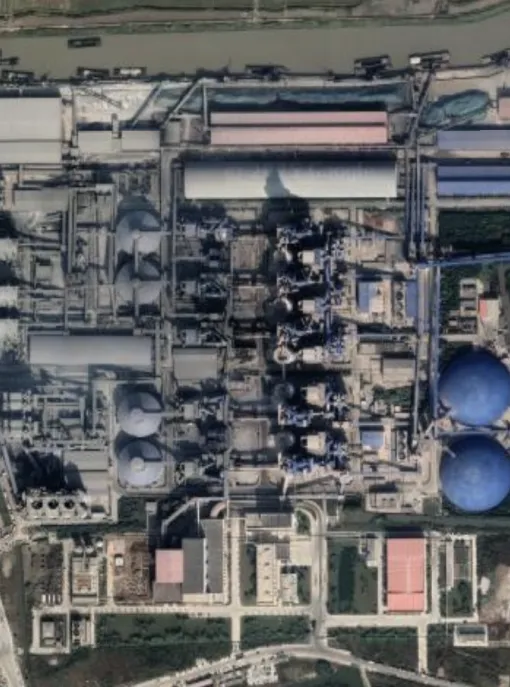
If a plant is still in the announced phase, prior to construction and operation, there may be no sign of activity. In other cases, only approximate location information could be found. Additionally, satellite photos in some geographies are updated infrequently, so recent activity is not shown.
Plant status is categorized as follows:
- Announced: Projects that have been announced in corporate or governmental planning documents, but have not begun construction.
- Construction: Physical plant structure building has begun.
- Operating: Plant is producing clinker, cement, or both.
- Mothballed: Plant clinker and/or cement production has been idled such that it cannot be brought into operation immediately, but is not closed.
- Operating pre-retirement: Plant is currently operating, but has announced plans to retire its cement and/or clinker capacity.
- Retired: Plant has ceased operations and no longer has the ability to produce cement and/or clinker.
- Cancelled: Plant previously planned or under development that has been cancelled. If no progress or announcements for an announced plant are made after 5 years, the plant is considered to be cancelled.
- Unknown: Information about plant type could not be found.
Yes, click on “Table view” on the bottom of the map.
Cement capacity is the amount of finished cement an integrated or grinding plant can theoretically produce given the efficiency of their installed finished cement grinding unit(s).
Clinker capacity is the amount of clinker that an integrated or clinker-only plant can theoretically produce given the efficiency of their installed kiln(s).
Capacities are measured in units of million metric tonnes per annum. When necessary, annual capacities are estimated based on the assumption of continuous operation of the production lines.
Note that capacity is not the same as production, which would be the actual amount of cement and/or clinker produced by a plant. Capacity is the theoretical amount that can be produced in a given year, but is typically greater than actual production which can be hampered by numerous factors.
Integrated cement plants are those that have active kilns to produce clinker and grinding capacity to produce finished cement. The amount of cement and clinker produced at these plants often do not match due to bottlenecking at various phases in the production line, and therefore these plants may supplement clinker shortcomings or sell off excess clinker produced.
Grinding plants are those that do not have active kilns to produce clinker, instead purchasing from other producers or transporting it in from other plants. These plants only have grinding capacity and therefore only produce finished cement. These plants are typically much smaller, cheaper to run, require less energy, and produce much lower emissions than integrated plants.
Clinker-only plants, much like their name suggests, produce only clinker and do not have grinding capacity. These plants are typically built to supplement clinker capacity for other integrated or grinding plants owned by the same company. Due to the singular focus on clinker production, the most energy and emission intensive process in cement manufacturing, these plants tend to have significant emission footprints.
The Global Cement and Concrete Tracker aims to include all operating cement plants in each country or area, regardless of size.
The standard naming convention of the Global Cement and Concrete Tracker is “[Municipality] Cement Plant”. Some plants are given unique names by the owners, or based on local conventions that fall outside of the standard naming convention. Those unique names are indicated when relevant.
The difference between white and grey cement is primarily in aesthetic; one is white and one is grey. However, to achieve that difference requires specific production methods.
Grey cement is the typical construction cement and is used in the majority of situations. White cement is primarily used for architectural or aesthetic purposes.
To achieve the correct color for white cement, iron and manganese oxides are minimized in the raw material mix and oil is primarily used as fuel, as opposed to coal or pet coke which is typically used for grey cement, to avoid contamination of the color. For these reasons, and the fact that white cement requires an independent production line from other cements, white cement tends to have higher energy requirements and emissions footprints, and be more expensive.
As different countries and regions have differing categorization systems for cement types, the reported types align with general categories of cement rather than one specified categorization system. As such, majority cement type falls within the following categories:
- OPC: The cement produced falls within the general category of ordinary portland cement, which does not include supplementary cementitious materials resulting in a high clinker percentage (typically 95% or more).
- Blended: The cement produced falls within the general category of blended cements, which utilizes supplementary cementitious materials to reduce clinker percentage, such as fly ash, slag, pozzolans, limestone, etc.
- Blast Furnace Slag: The plant produces blast furnace slag (GGBS) for use in blended cements (this does not include plants that produce blended cements made with blast furnace slag, which would fall in the “blended” category).
- N/A: The plant does not produce finished cement or GGBS.
- Unknown: The primary cement type produced can not be clearly determined.
Integrated and clinker production facilities can utilize multiple types of production which impact the overall carbon footprint of the finished clinker. The production types include:
- Wet – The most carbon intensive production method. Raw material inputs are mixed into a meal using water and then dried out in the kiln. Required higher water input and more energy use to dry out the wet meal.
- Dry – A more modern production method. Mixes raw materials with a precalciner using air cyclones. It is much less energy and carbon intensive compared to wet production.
- Semidry – A hybrid between wet and dry production.
- Mixed – The plant contains multiple production lines which utilize different production methods.
Most modern kilns use dry production as it is less carbon intensive and saves money in the long run. Dry process kilns often use precalciners as they are more effective at mixing the dry meal while at the same time preheating the material before it enters the kiln, thus saving energy.
The GCCT has integrated its owner and parent data with GEM’s Global Energy Ownership Tracker. Please visit that project’s homepage for more information.
The GCCT reports the first owner/operator of the plant in the “Owner” column.
Please fill out an error report form here.
The tracker was designed and produced by Global Energy Monitor. To the extent possible, the information in the tracker has been verified by researchers familiar with particular countries. The following people participated in plant-by-plant research: Joshua Clement (Global Energy Monitor), Caitlin Swalec (Global Energy Monitor), Henna Khadeeja (Global Energy Monitor), Jessie Zhi (Global Energy Monitor), Norah Elmagraby (Global Energy Monitor), Zhanaiym Kozybay (Global Energy Monitor), Ziwei Zhang (Global Energy Monitor), Rolando Almada (Global Energy Monitor), (Charmaine Daisay (Global Energy Monitor), Fanwei Liu (Global Energy Monitor), and Charlene Hou (formerly Global Energy Monitor). The project is managed by Joshua Clement, within GEM’s Heavy Industry Program, managed by Caitlin Swalec, with support from Louisa Plotnick and Ted Nace.
Please refer to the Download Data section for citation guidance.
Contact
For questions about the Global Cement and Concrete Tracker, contact Caitlin Swalec: