countries included
coal units tracked
plant owners
kg CO₂ per year
Overview
Coal power development is becoming increasingly concentrated in a shrinking number of countries.
Coal remains an entrenched but increasingly high-risk component of the global power sector, standing as the world’s most carbon-intensive and polluting fossil fuel. Beyond its climate impact, coal combustion is a leading source of sulfur dioxide, nitrogen oxides, and particulate matter, which drive severe public health crises worldwide. More than 2,200 gigawatts (GW) of coal power operates worldwide, with another 710 GW under development.
Coal power development is becoming more geographically concentrated, with a dwindling number of countries accounting for the majority of new projects. In 2018, the top ten countries accounted for 83% of global coal capacity under development; by 2025, that share had risen to 97%, dominated by China and India, who alone comprise nearly 90%. Only 32 countries were proposing or building new coal plants in 2025, down from 38 the previous year and 75 in 2014. Entire regions, such as Latin America, have achieved No New Coal status, and a growing collection of countries are committing to phasing out existing coal power.
To meet the Paris Agreement’s 1.5°C target, all of the world’s coal-fired power plants must be retired by 2040. Yet GCPT data reveals that more than half of global operating capacity does not have a Paris-aligned closure commitment. Across major coal-using economies, coal’s persistence has increasingly reflected specific policy choices rather than market demand. In China, new coal plant proposals have been justified as necessary for system reliability and flexibility, even as renewable energy meets new demand. In the U.S., regulatory and political interventions have kept coal plants operating that would otherwise have retired, contributing to higher power prices. Phasing out coal and meeting climate targets will require addressing policies that keep coal plants running even when cleaner, cheaper alternatives are available.
97% of coal power development worldwide is concentrated in just ten countries
42 countries have eliminated coal power under development since the 2015 Paris Agreement
What's inside?
The most recent release of this data was in January 2026.
Methodology
The methodology for the Global Coal Plant Tracker describes how GCPT data is collected, categorized, and organized.
Global Energy Monitor’s Global Coal Plant Tracker (GCPT) uses a two-level system for organizing information, consisting of both a database and wiki pages with further information. The database tracks individual coal plant units and includes information such as plant owner and parent company, plant status, plant and coal type, and location. A wiki page for each power station is created within the GEM.wiki, and contains more detailed, footnoted information such as project history and public opposition. The database and wiki pages are updated bi-annually, in January and July. Around April and October, partial supplemental releases also cover updates to proposed coal units outside of China.
Announced: Proposed plants that have been described in corporate or government plans but have not yet taken concrete steps such as applying for permits or acquiring land.
Pre-permit development: Plants that are seeking environmental approvals and pursuing other developmental steps such as securing land and water rights. In India, this means that a “Terms of Reference” has been received from the Ministry of Environment and Forests.
Permitted: All necessary environmental approvals have been received but the project has not yet begun construction.
Construction: Site preparation and other activities are underway.
Shelved: Progress has been halted for at least two years.
Cancelled: A cancellation announcement has been made, or no progress has been observed for at least four years.
Operating: The plant has been formally commissioned or has entered commercial operation.
Mothballed: The plant (1) has been deactivated or put into an inactive state but is not retired, or (2) has been damaged and is not in use. These plants could return to operation but are not currently operating.
Retired: The plant has been decommissioned.
Preliminary lists of plants in each country were gathered from public and private data sources including Global Energy Observatory, CARMA, BankTrack’s “Dirty Deals” list, Wikipedia, Enipedia, WRI’s “Global Coal Risk Assessment” report (2012), Platts World Energy Power Plant database, Industcards “Power Plants Around the World Photo Gallery”, national-level trackers developed by environmental organizations (Sierra Club (USA), Kara Atlas (Turkey), and Deutsche Umwelthilfe (Germany)), as well as various company and government sources. The data was then vetted against additional sources of information, listed below.
Coal plant data is validated and updated through five main sources:
- Government data on individual power plants (such as India Central Electricity Authority’s “Monthly Report on Broad Status of Thermal Power Projects in the Country” and the U.S. EIA 860 Electric Generator Inventory), country energy and resource plans, and government websites tracking coal plant permits and applications;
- Reports by state-owned and private power companies;
- News and media reports;
- Local non-governmental organizations tracking coal plants or permits;
- On the ground contacts who can provide first-hand information about a project or plant.
Where possible, coal plant data is circulated for review to researchers familiar with local conditions and languages. Reviewers and collaborators include CAN Europe, Centre for Research on Energy and Clean Air, Beyond Fossil Fuels, Greenpeace, Kiko Network, Philippine Movement for Climate Justice, Sierra Club, Yayasan Indonesia Cerah, and many others.
For each power plant and proposal, a wiki page is created on Global Energy Monitor’s GEM.wiki. A wiki page is a footnoted fact sheet. Wiki pages provide a repository for in-depth information including project background, financing, environmental impacts, coal types and sources, public opposition, aerial photographs, videos, links to permits, coordinates, and maps. Under standard wiki convention, all information is linked to a published reference, such as a news article, company or government report, or a regulatory permit. In order to ensure data integrity in the open-access wiki environment, Global Energy Monitor researchers review all edits of project wiki pages.
For each coal plant unit, the tracker calculates carbon dioxide emissions based on the following information:
- Unit capacity
- Emission factor (pounds of carbon dioxide per million Btu) for each type of coal
- Heat rate for each combustion technology (Btu/kWh), adjusted for quality of coal
- Capacity factor based on the global average utilization rate
Lifetime emissions assume 40 years of operation. For a 39-year-old plant, that means one more year of operation is assumed. For plants that are 40 years or older, 5 more years of operation are assumed.
Further details including parameters and sources can be found at Estimating Carbon Dioxide emissions from Coal Plants on GEM.wiki.
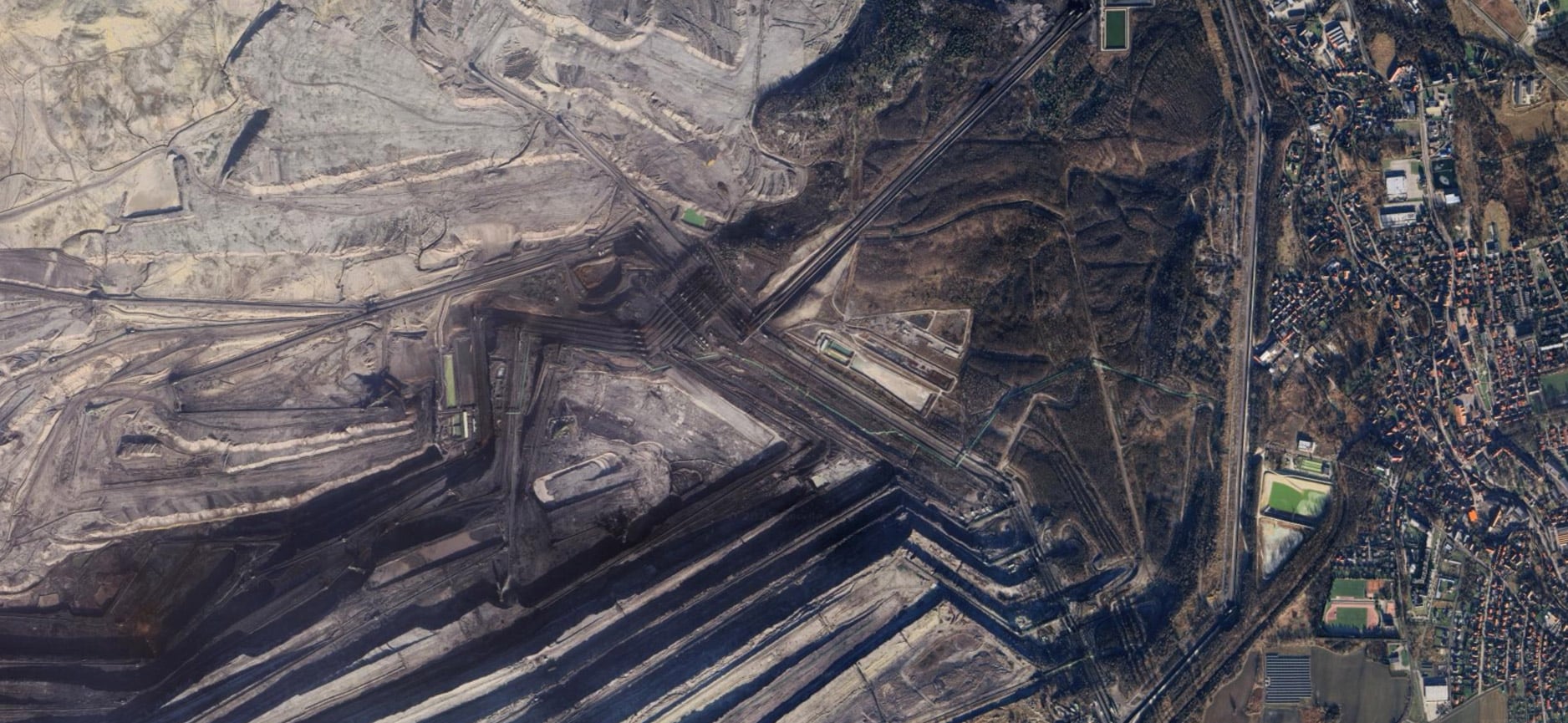
To allow easy public access to the results, Global Energy Monitor worked with Earth Genome to develop a map-based and table-based interface. In the case of exact coordinates, locations have been visually determined using Google Maps, Google Earth, Planet Labs, or Wikimapia. For proposed projects, exact locations, if available, are from permit applications or other company documentation. If the location of a plant or proposal is not known, GEM identifies the most approximate location.
Frequently asked questions
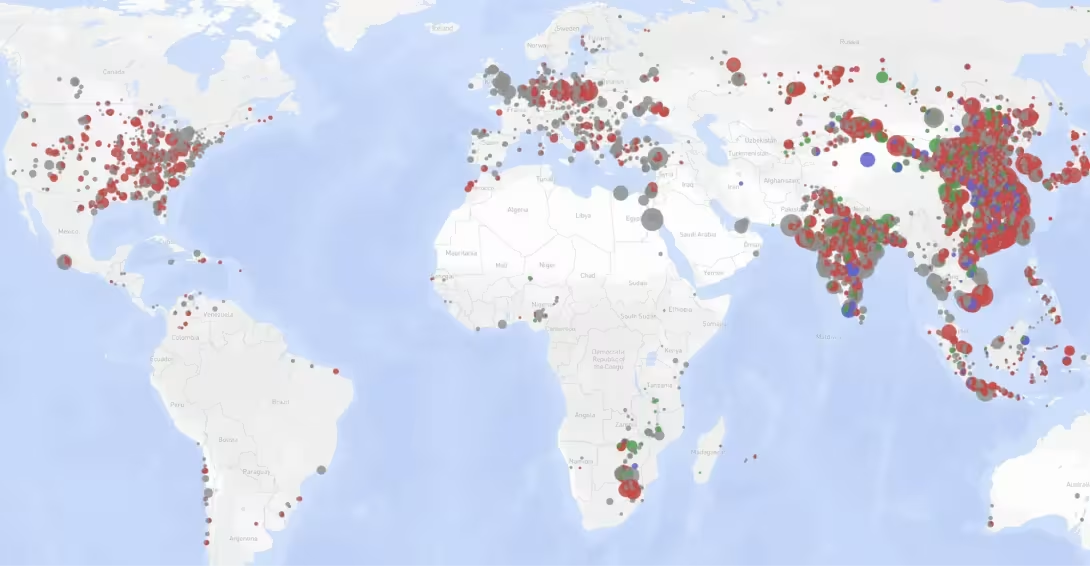
The colors indicate the status category:
- Announced: Projects that have appeared in corporate or governmental planning documents but have not yet moved forward by applying for permits or seeking land, coal, or financing. This often includes a planned “Phase II” at a location where “Phase I” is currently under development.
- Pre-permit development: Projects that have actively moved forward in one or more of the following ways: applying for environmental permits; securing financing; and/or acquiring land, coal, water rights, or transmission arrangements. In India, pre-permit means the project has received a “terms of reference” (TOR) letter from the Ministry of Environment, while in China it means a feasibility study has been completed.
- Permitted: Projects that have secured all environmental permits and licenses but have not begun construction. For most countries, including India, this means the environmental impact assessment has been approved and environmental clearance has been granted. In China, “Permitted” means a plant has received a permit from the Development and Reform Commission, allowing for construction. In some countries, such as Turkey, construction is not allowed until both the EIA has been approved and a generation license is granted.
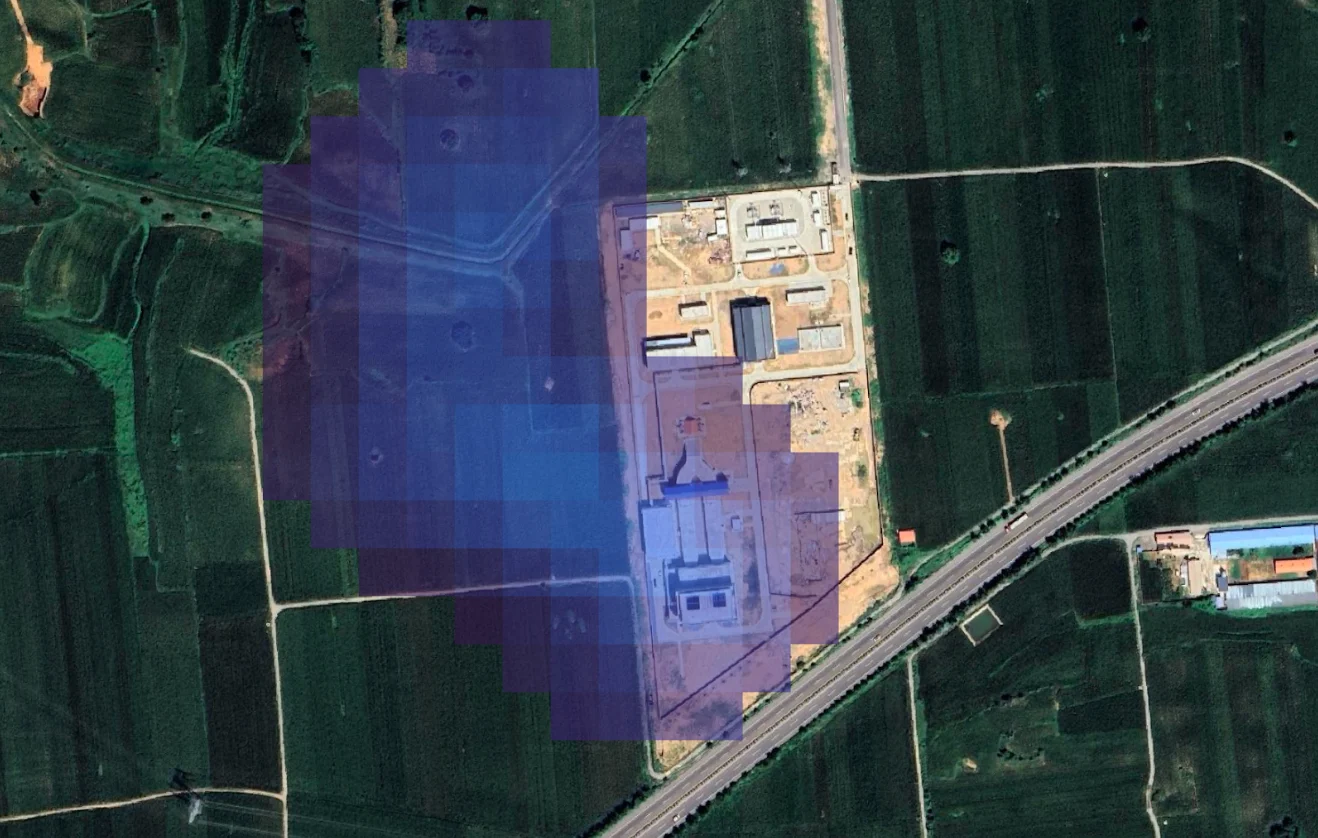
- Construction: concrete-pouring or foundation work has begun. GEM does not mark a plant as under construction if a “foundation stone” has been laid or only land preparation such as site clearing or dredging is underway, because such activities do not always lead to physical construction of the plant. Where possible, satellite images and first-hand accounts are used to verify construction status.
- Shelved: Projects where sufficient evidence is found to indicate that it is no longer moving forward. A project that shows no activity over a period of 2 years is categorized as “Shelved”. Projects where construction has been put on hold for over 2 years are also designated “Shelved.” If a company or government announces that a project is on hold, it is marked shelved until it meets the criteria for cancellation (below).
- Cancelled: In some cases companies or governments announce that they have cancelled a project. More often a project fails to advance and then quietly disappears from company documents or government energy plans. A project that was previously in an active category is moved to “Cancelled” if it disappears from company or national planning documents, even if no announcement is made. In addition, a plant that shows no activity over a period of 4 years is categorized as “Cancelled”. Projects that are switched to natural gas or biomass are considered “Cancelled” as coal plants.
- Operating: Units that have been formally commissioned and have entered commercial operation.
- Mothballed: Units that have been deactivated or put into an inactive state but not retired. Such units can return to operation, although they are not currently operating.
- Retired: Units that have been permanently decommissioned or converted to another fuel.
Each coal plant location is marked “exact” or “approximate.” In the case of exact coordinates, locations have been visually determined using Google Maps, Google Earth, or Wikimapia (existing projects). For proposed projects, exact locations, if available, are from permit applications or other company documentation.
If a coal plant is still in the pre-construction phases (Announced, Pre-permit development, or Permitted), there may be no sign of activity. In other cases, only approximate location information could be found. Finally, satellite photos in some geographies are updated infrequently, so recent activity is not shown.
Locations tend to be known with greater accuracy as plants move from early stages of development toward construction. To find out the coordinates of a location and whether a location is exact or approximate, click on the location dot, select the wiki page, and look under “Project Details.”
Yes, click on “Table” in the top left corner of the map or download the data in spreadsheet form here.
The tracker uses a calculation based on size of plant, type of combustion technology, and variety of coal. For details, see Estimating Carbon Dioxide Emissions from Coal Plants on GEM.wiki.
The Global Coal Plant Tracker includes all operating coal-fired units 30 MW or larger, as well as units proposed since 2010 and units retired since 2000.
Capacity is measured in gross megawatts (also known as nameplate capacity), prior to subtracting capacity used for plant operations.
The tracker only includes coal-fired electrical generating plants.
The tracker provides separate data on each of the multiple power-generating facilities that typically exist at a particular location. Each of these facilities is referred to as a “unit.” The entire collection of units at a given location is referred to as a “plant.”
Please fill out an error report here.
The tracker was designed and produced by Global Energy Monitor. To the greatest extent possible, the information in the tracker has been verified by researchers familiar with particular countries. The following Global Energy Monitor researchers participated in the January 2024 update: Jelena Babajeva, Lucy Hummer, Jeanette Lim, Claire Pitre, Mingxin Zhang, and Xing Zhang. The following people participated in the initial plant-by-plant research: Elena Bixel (Europe Beyond Coal), James Browning (Global Energy Monitor), Bob Burton (Global Energy Monitor), Gregor Clark (Global Energy Monitor), Joshua Frank (formerly Global Energy Monitor), Ted Nace (Global Energy Monitor), Christine Shearer (formerly Global Energy Monitor), Adrian Wilson (Global Energy Monitor), Aiqun Yu (Global Energy Monitor), and others. Additional wiki editing and fact checking was provided by Christine Law, Iris Shearer, Austin Woerner, Yvette Zhu, and others. The tracker’s initial architect was Ted Nace and its first project manager was Christine Shearer. The current project manager is Flora Champenois. Web/GIS programming was done by Tom Allnutt and Gregor Allensworth (GreenInfo Network), with support from Tim Sinnott (GreenInfo Network).
Contact
For questions about the Global Coal Plant Tracker, contact Christine Shearer: