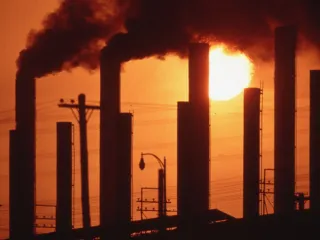
In order to manufacture many of the materials that make up people’s daily lives, industries rely on primary commodities such as gas for petrochemicals, iron ore for steel, and limestone for cement. These commodities are produced through oil and gas extraction, mining, and quarrying. The examination of an industrial facility from extraction site to finished product can provide a more complete picture of heavy industry’s impacts.
Global Energy Monitor (GEM) supports supply-chain analysis with asset-level data on chemical, steel, and cement production infrastructure. Connecting assets across the value chain reveals how extraction sites, transport infrastructure, and downstream facilities depend on one another. GEM’s trackers establish these asset relationships, while external research and reporting provide evidence on associated effects.
A just transition for heavy industry extends beyond the plant to the extractive activities that supply it, hundreds of kilometers away. GEM's open-source data gives policymakers, researchers, and analysts a more complete view of industrial value chains and the risks across them.
Case study 1: Petrochemicals, extraction, and pollution in Argentina
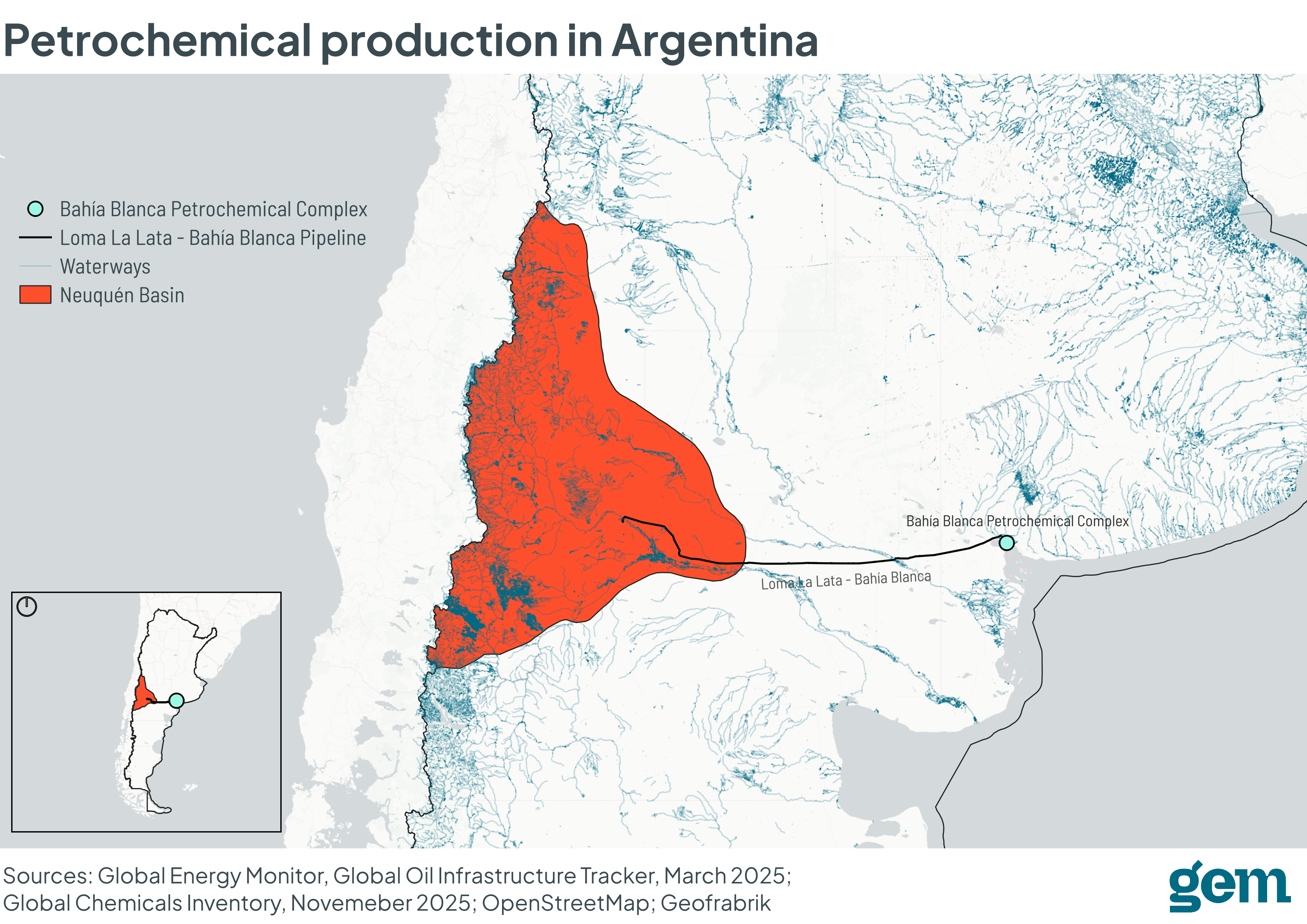
Petrochemical production in Argentina is a complex web that stretches hundreds of kilometers, starting in the rugged Vaca Muerta formation inside the Neuquén Basin and ending in the coastal Bahía Blanca Petrochemical Complex in Ingeniero White. GEM tracks the assets that make up this web: extraction sites are tracked by the Global Oil and Gas Extraction Tracker (GOGET), the pipeline network is captured through the Global Oil Infrastructure Tracker (GOIT), and the petrochemical site itself is in the Global Chemicals Inventory (GChI). The environmental and social effects of the Bahía Blanca complex are widely studied, but adding GEM’s data on upstream extraction sites extends the picture back to the wellhead.
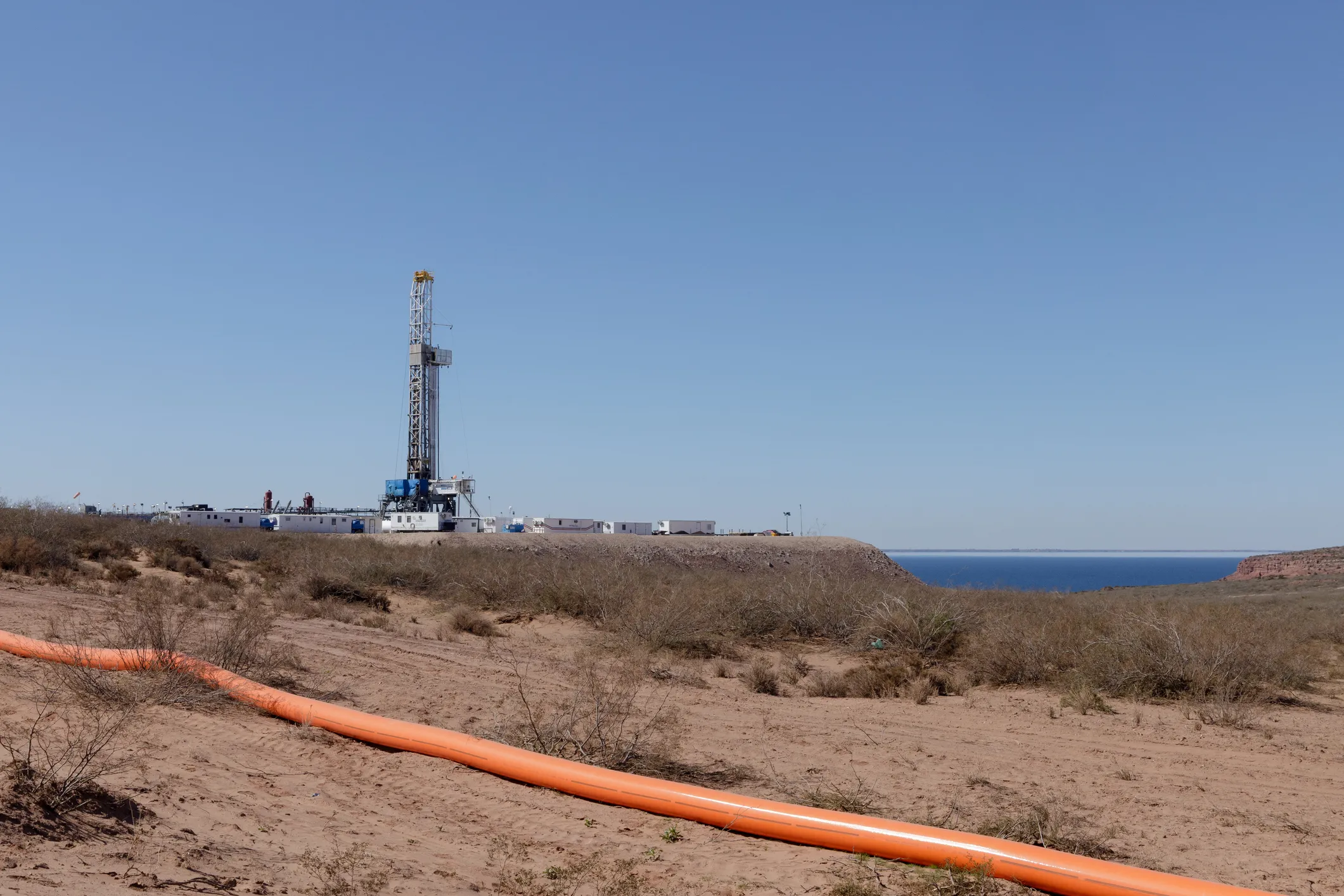
First, oil and gas is fracked in the Vaca Muerta formation by injecting water, sand, and chemicals to separate underground bedrock, which also releases methane and other co-pollutants. The fluid injection used in fracking has been linked to seismicity in the basin, which can damage aging wells and other infrastructure. The indigenous Mapuche communities in the basin have reported health impacts, and local farmers have reported reduced harvests.
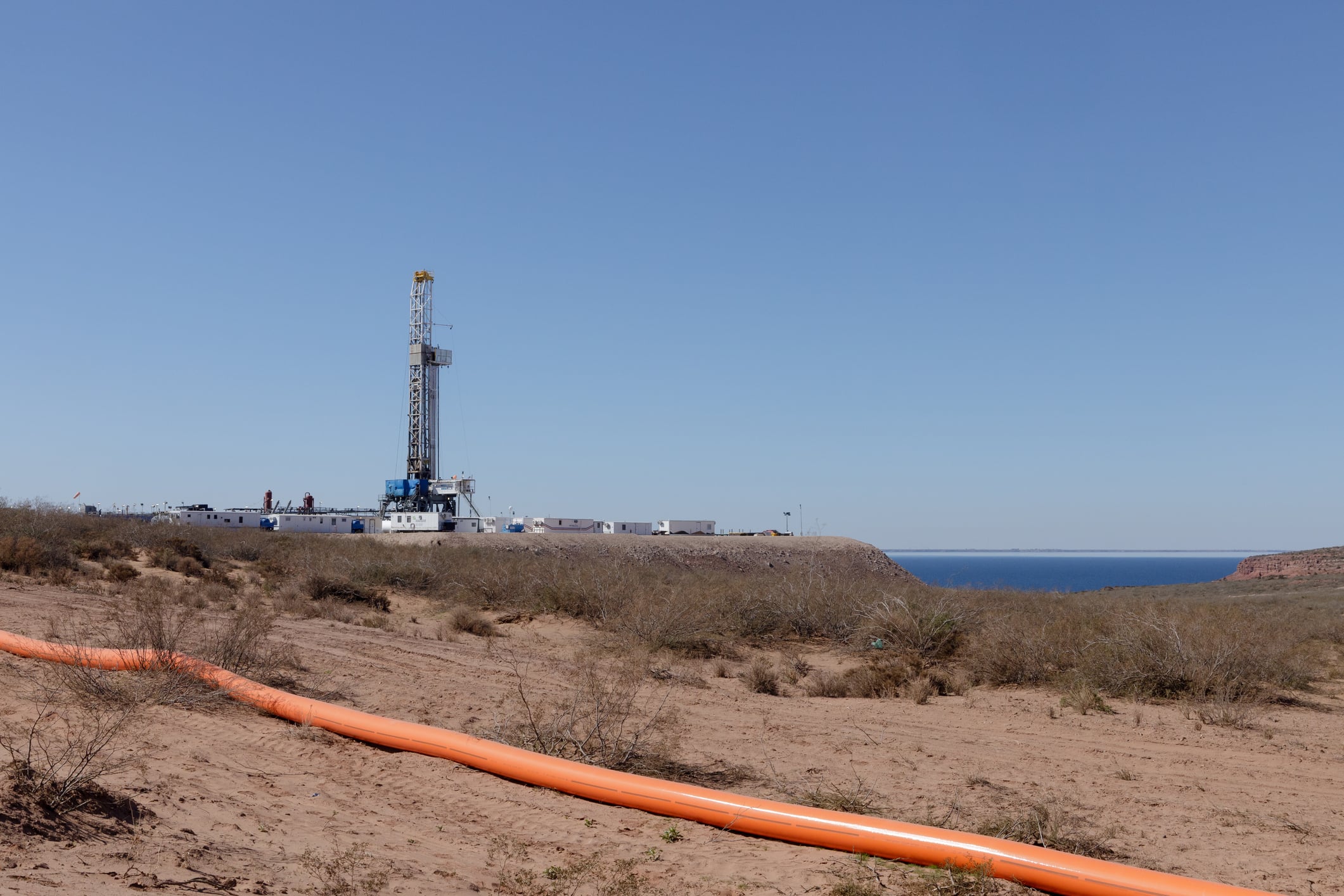
Unconventional oil drilling rig in Lake Mari Menuco, Vaca Muerta, Argentina. Photo by Emiliano Ortiz
GEM’s gas infrastructure data shows how the natural gas liquids (NGLs) are then transported over 600 km through the Loma La Lata - Bahía Blanca pipeline, running alongside other oil, gas and NGL infrastructure, such as the Neuba I and Neuba II Gas Pipelines. Within pipeline networks, methane leakage is a documented risk, with associated health and air quality effects for nearby communities.
The NGLs eventually make it to the Bahía Blanca Petrochemical Complex. At the site, ethane separated from the NGL stream is cracked to produce ethylene, a primary feedstock for plastics. Studies of the estuary have found elevated concentrations of heavy metals and microplastics in sediments and marine organisms, which researchers attribute in part to industrial discharge. With each stage of the petrochemical production comes documented environmental effects.
Case study 2: Iron ore mining and Sámi land use in Sweden
Norrbotten County, in the northernmost part of Sweden, is where a majority of the country’s iron ore mining takes place. According to the Global Iron Ore Mine Tracker (GIOMT), 32 million tonnes of iron ore were produced across four active mines in 2024. About 45% of that came from Europe’s largest iron ore mine, the LKAB Kiirrunavarra Mine (Kiruna Iron Ore Mine). The mine goes 2 km deep, with 725 million metric tonnes of reserves.¹ The extracted iron ore is sent via railway 265 km away to SSAB Luleå steel plant (tracked by the Global Iron and Steel Tracker or GIST) or 117 km to Narvik, Norway, for domestic and international iron and steelmaking. Both the GIOMT and GIST map out this journey from mine to steel plant, capturing the mining-induced displacement often overlooked when only looking at downstream impacts.
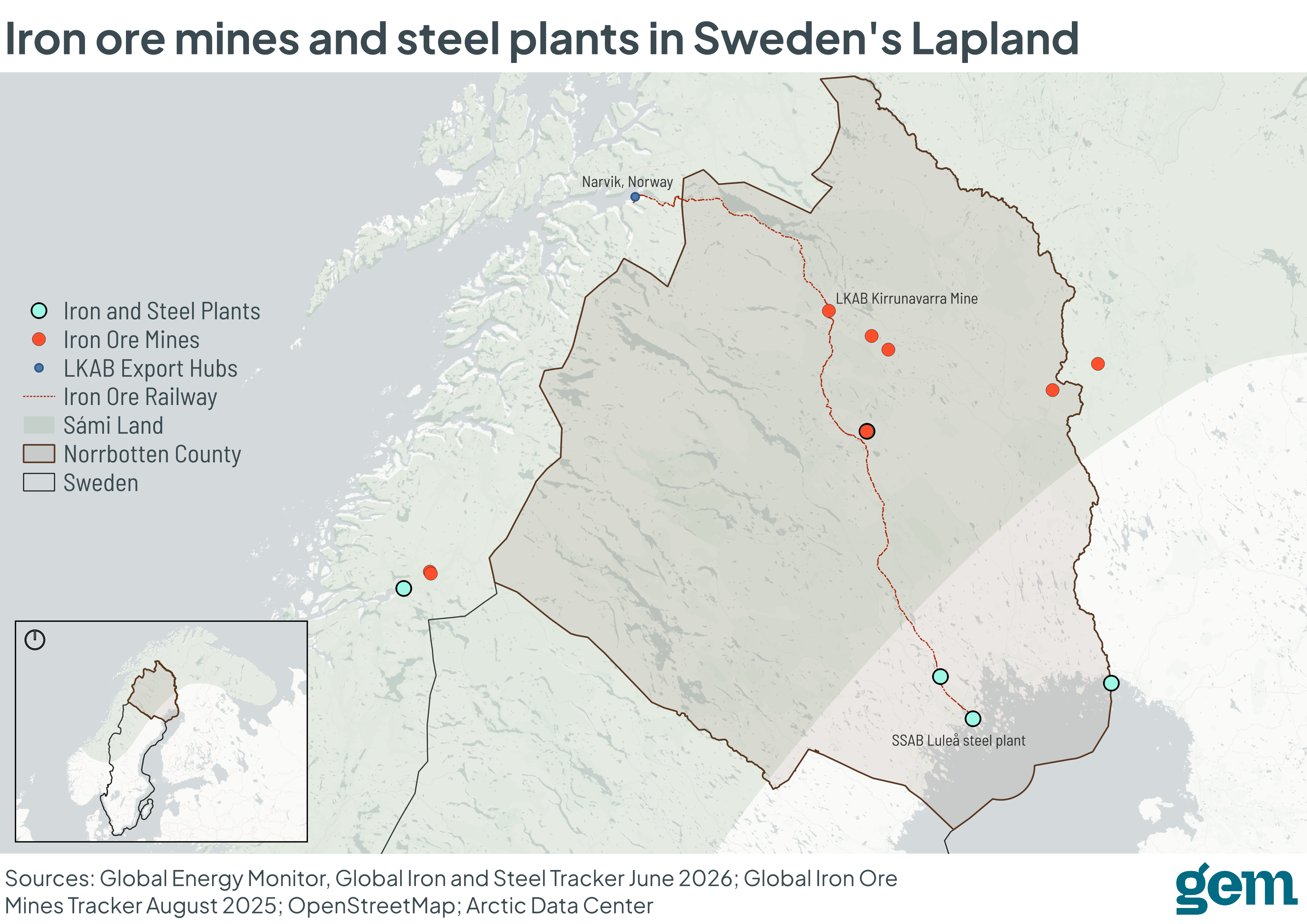
The Kiruna Iron Ore Mine has had major impacts on traditional Sámi² land, primarily affecting Sámi reindeer herders and their reindeer, who rely on grass pastures for migration paths. Herding communities and researchers have documented that the mine and associated infrastructure fragment these routes, pushing herds onto longer detours. Subsidence caused by mining, together with the extension of the ore body beneath the town, led to a decision in 2004 to relocate Kiruna’s city center. Continued expansion of the mining area and other ore deposit discoveries further reduce the availability of land for migration.
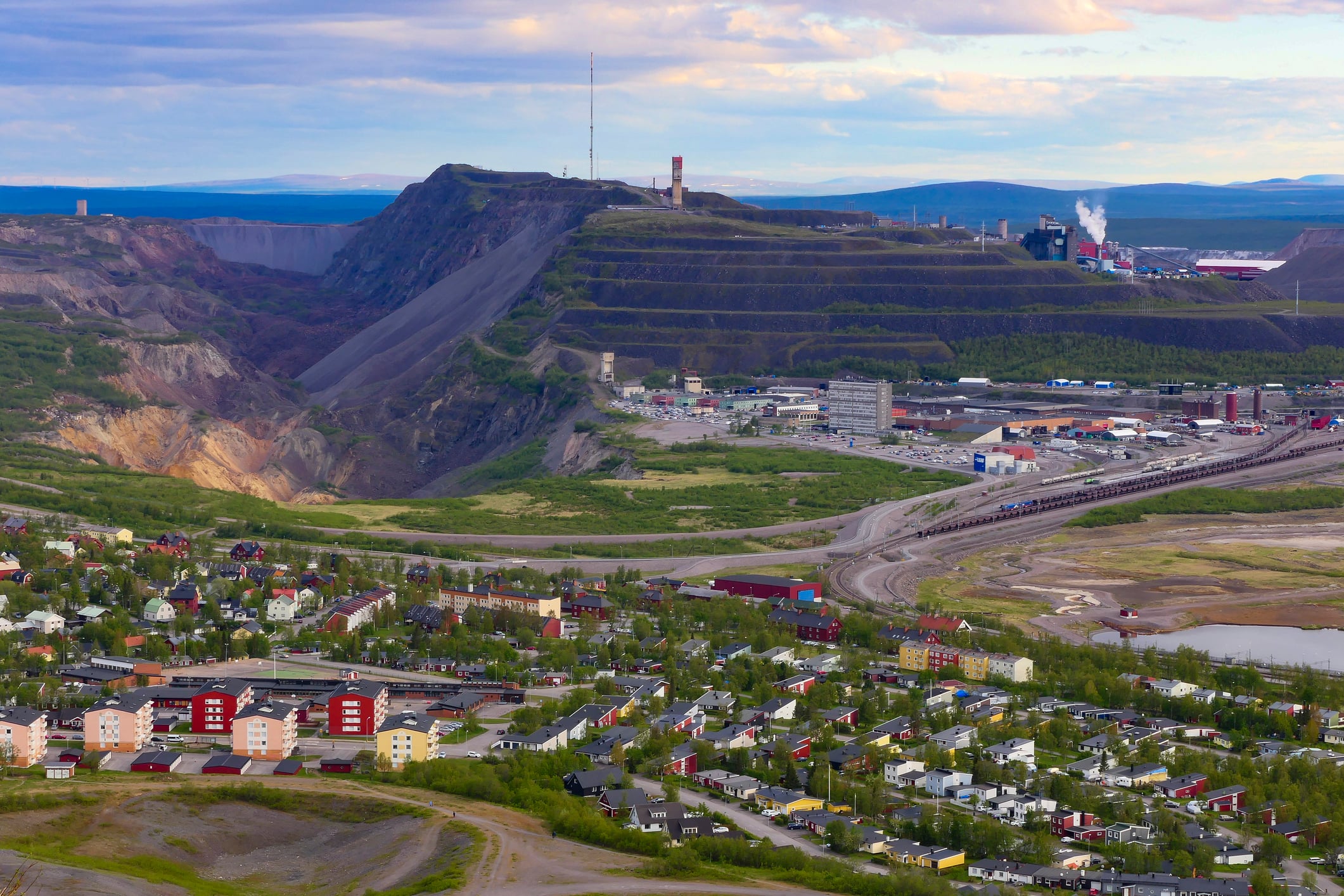
View of the iron mining town of Kiruna, Sweden. Photo by Alexander Farnsworth.
While it is the largest underground iron ore mine in Europe, the Kiruna Iron Ore mine is only one piece of the technological megasystem of the north that contributes to impacts on the Sámi. There are three other iron ore mines, railroads, and other industrial infrastructure in the Swedish Lapland, all of which intersect with traditional Sámi land.
The plant-level data cannot capture these upstream effects entirely, but connecting the value chain extends analysis from steel plants back to the mine.
Case study 3: Cement, quarrying, and public health in Senegal
Senegal’s cement industry is booming due to domestic and regional demand, where production is concentrated around the capital of Dakar. Across the country’s four operating cement plants, there is an annual cement capacity of 12.8 million tonnes and a clinker capacity of 5.3 million tonnes according to GEM’s Global Cement & Concrete Tracker (GCCT). The communities near limestone quarries bear the effects of this expansion.
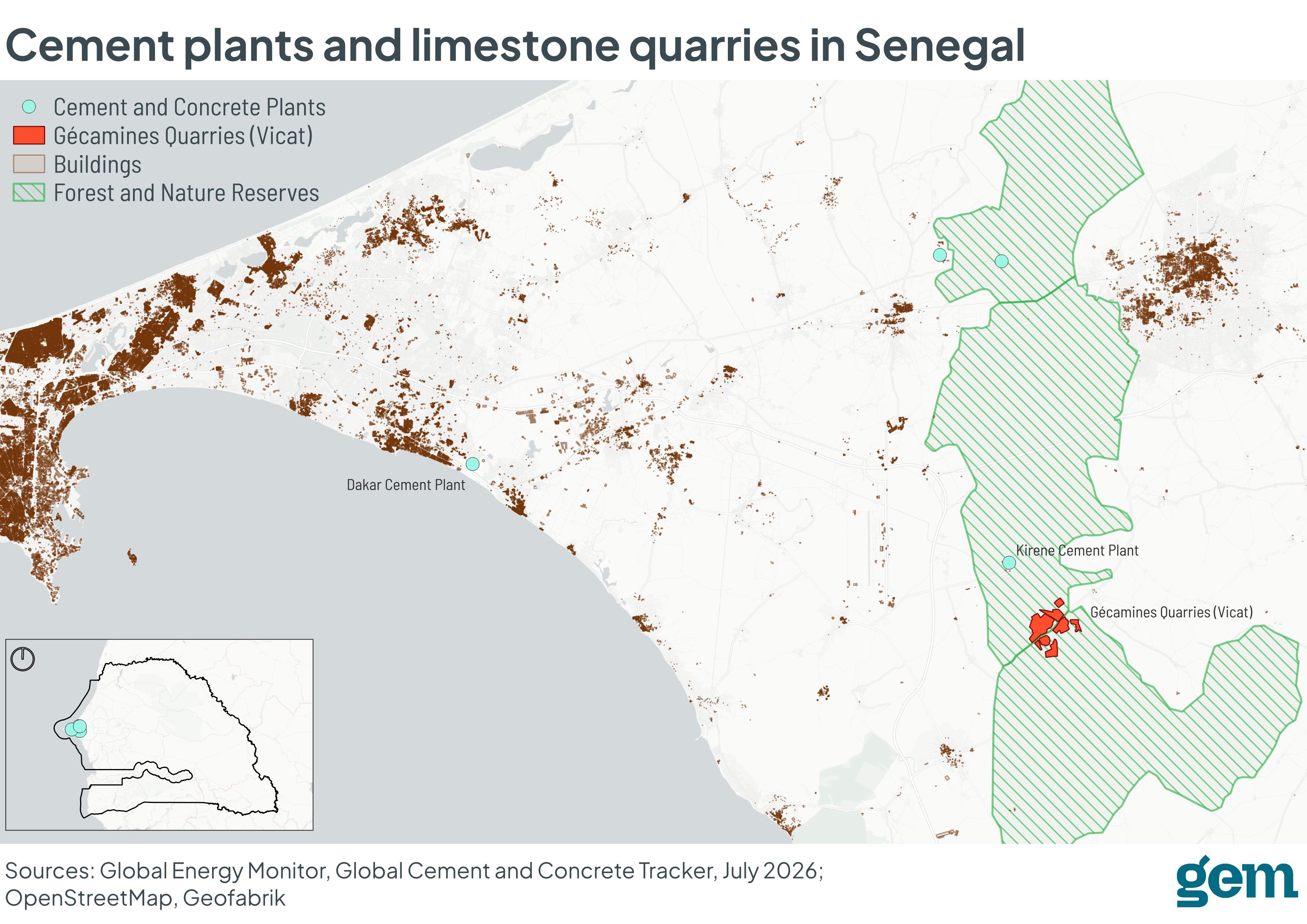
Inside the baobab forests of Bandia, the Gècamines Quarries site (Vicat Group) has been operating since 2002 and extracts half a million tonnes of limestone per year for the Les Ciments du Sahel Kirène Cement Plant (Kirene cement plant), about 75 kilometers away. Along with the Kirene cement plant, the GCCT also looks at the nearby Sococim Industries Dakar Cement Plant, which has acquired 462 hectares of farmland during its expansion.
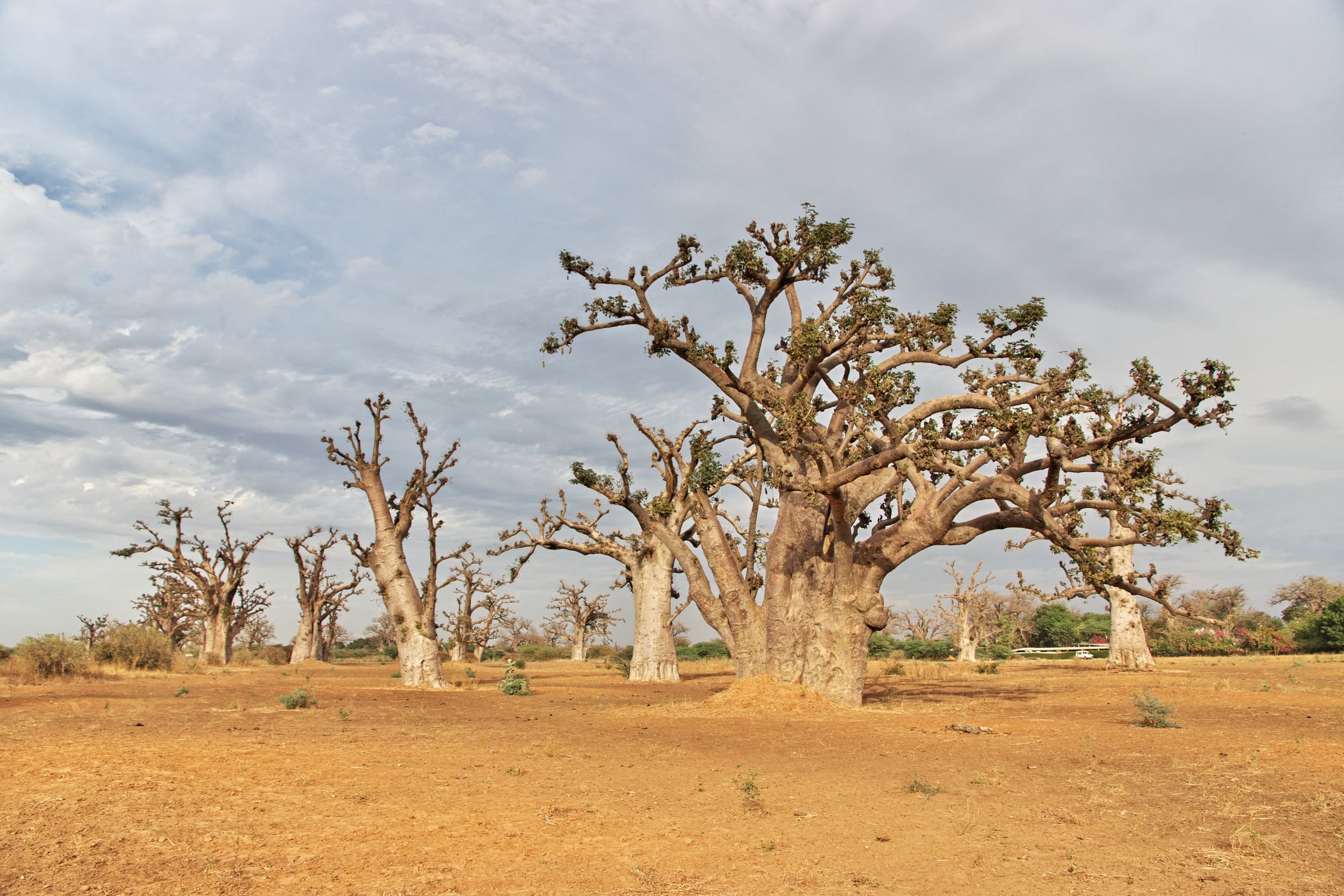
Baobab Grove. Dakar, Senegal. Photo by Sergey Strelkov.
Limestone quarrying begins with surface mining, where a layer of earth is blasted open to extract limestone deposits. The residents of Bandia have reported to Agence France-Presse (AFP) that the blasts have cracked the walls and foundations of nearby homes. They have also raised concerns about clouds of white limestone dust. The prolonged inhalation of respirable crystalline silica can cause silicosis, an incurable and sometimes fatal lung disease. Despite Vicat’s denial, health officials in Bandia have reported the rise of respiratory illness in surrounding areas.
New perspectives
Decarbonization strategies that address production technology alone leave the impacts of fracking, mining, and quarrying unaccounted for. The Mapuche in Vaca Muerta, the Sámi in the Arctic, and the residents of Bandia and Dakar are just three examples of how people experience the impacts of heavy industry extraction around the globe.
Each asset in these datasets corresponds to a physical site with documented effects on the people living nearby.
Explore GEM’s data to connect the upstream extraction sites to the industrial facilities in your area or for your next research project.
To stay informed about GEM’s data releases and analysis on the heavy industry sector, as well as other energy sectors, subscribe to our newsletters. You can also consider supporting GEM’s commitment to open-access energy data with a donation.