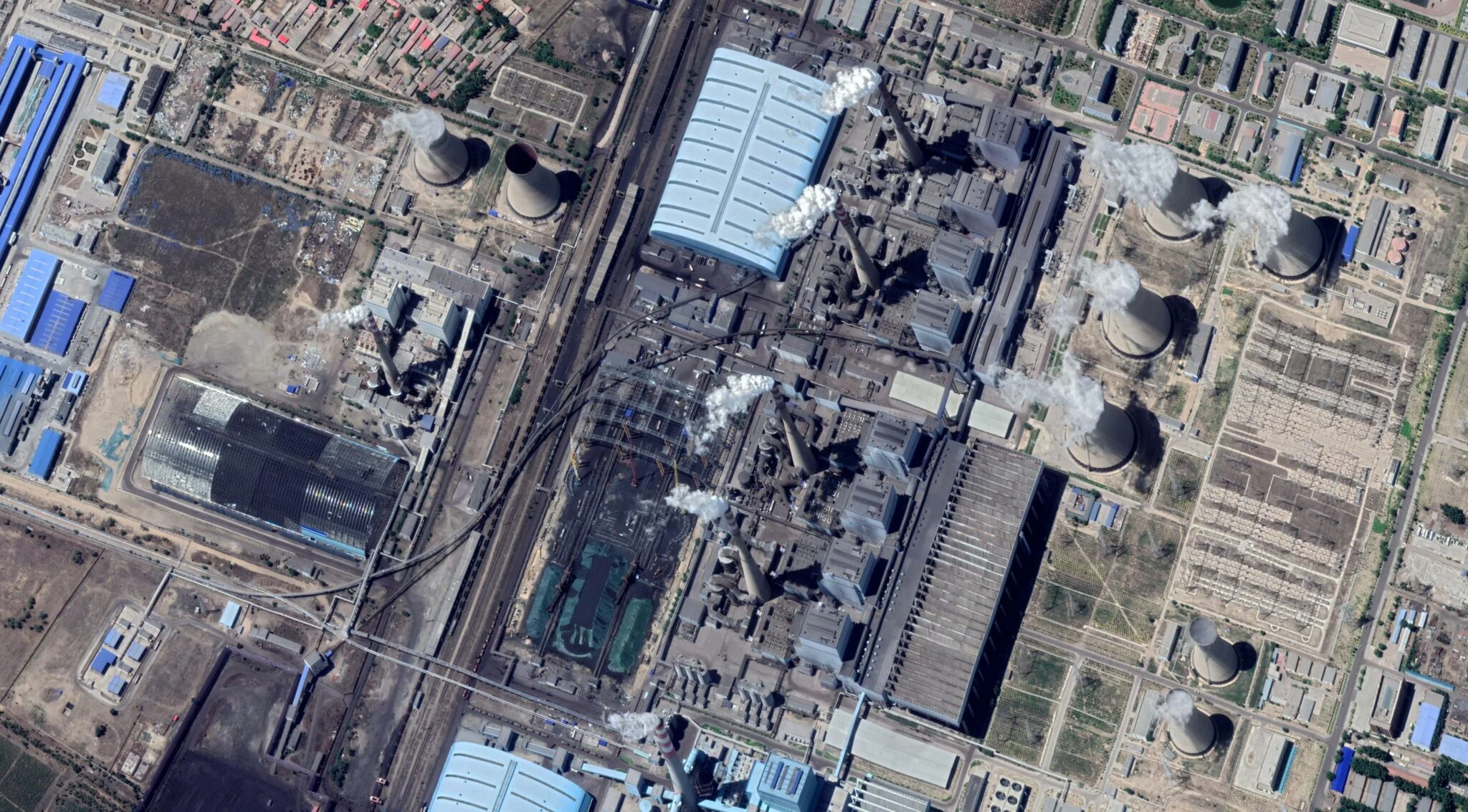
The July 2026 update of the Global Coal Plant Tracker (GCPT) is now available, covering coal power developments through the end of June 2026. The update includes 49 newly shelved or cancelled plants and 70 new coal plant proposals. The latest release also includes refined coal source data, details about state-owned enterprises, and harmonized subnational unit names.
Download the dataset
Below are the most notable developments in the first half of 2026:
Half as many countries are developing new coal power compared to ten years ago
As of June 2026, 32 countries have coal-fired power capacity in pre-construction or construction. In 2016, there were 64 such countries. Fifteen of these countries have just one or two power stations in development, and just eight countries have more than ten in development.
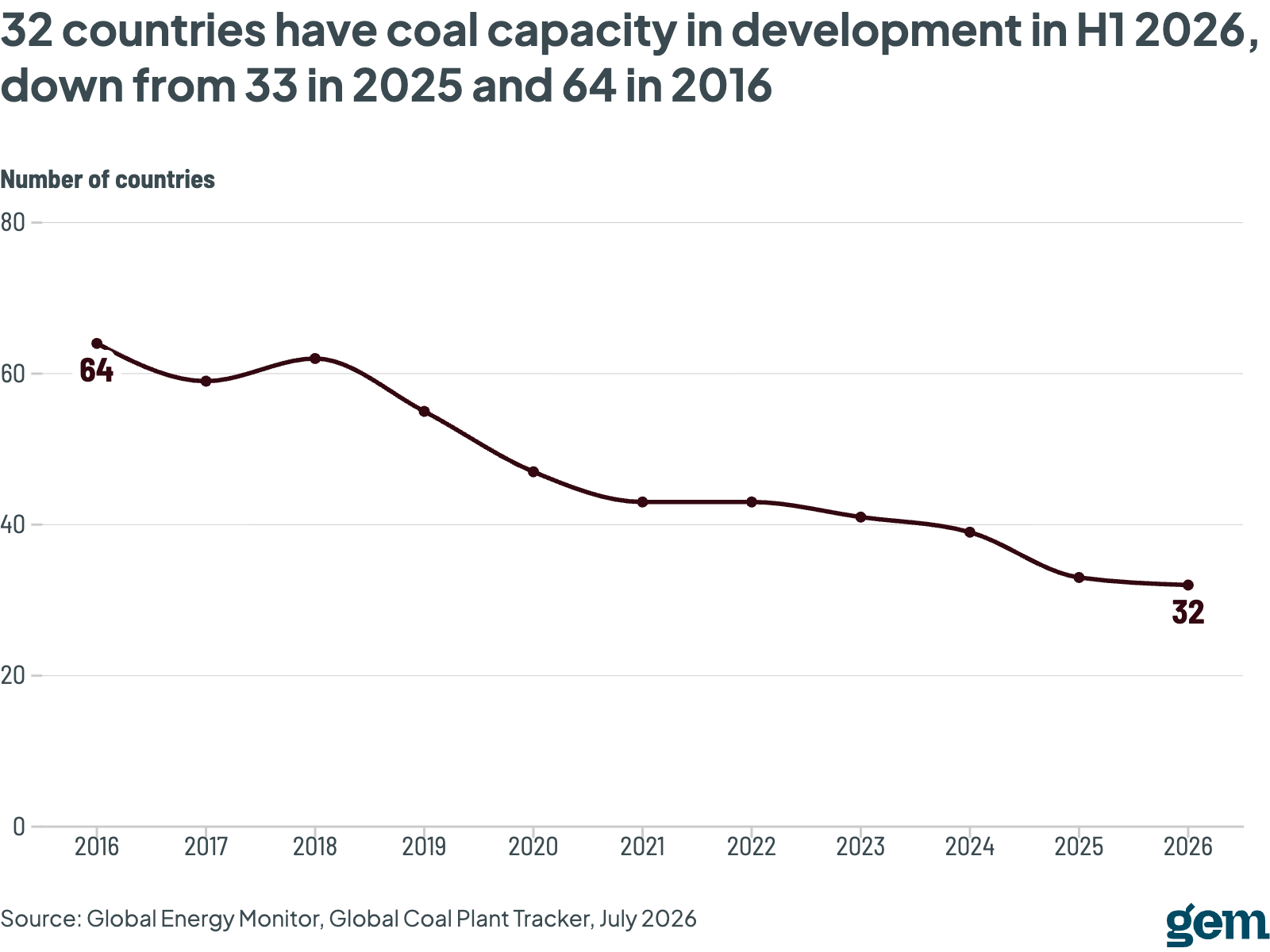
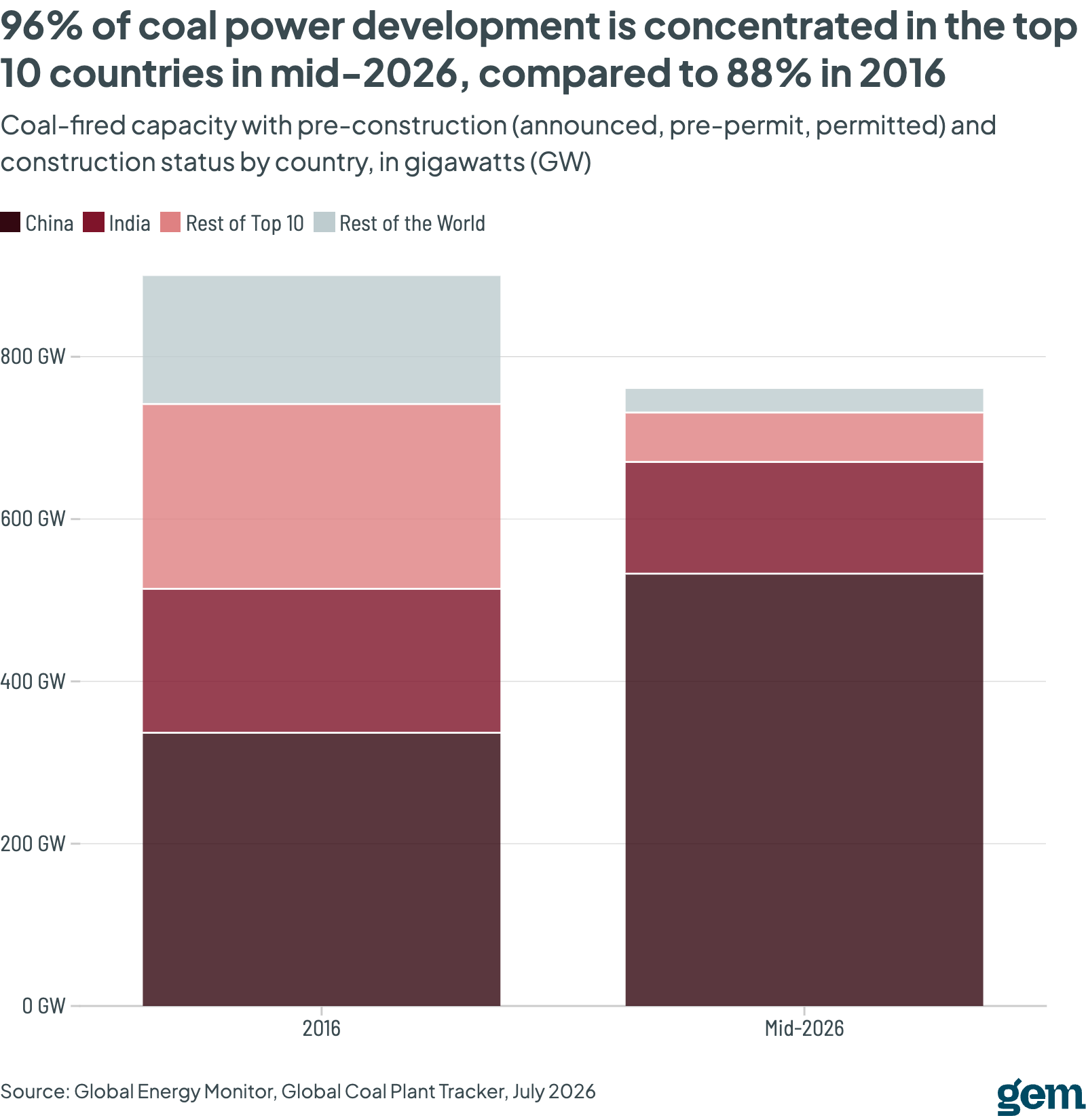
Global coal development has also become more concentrated, with the top ten countries (China, India, Indonesia, Vietnam, Russia, Kazakhstan, Zimbabwe, Bangladesh, Mongolia, and the United States) accounting for 96% of global development and China and India together accounting for 88%. In 2016, the top ten countries accounted for 84% of global development, and China and India together accounted for 57%.
China and India continue to dominate actual and planned coal capacity additions
Over 30 gigawatts (GW) of coal power capacity began operating in China in the first half of the year, contributing 85% of globally commissioned capacity. Another 25.4 GW entered construction in China, and 69.3 GW was newly proposed from January to June, increasing for the fifth year in a row.
However, just 8.6 GW of pre-construction capacity was permitted in China, and an April 2026 central policy calls for the reasonable control of both coal power capacity and generation. Combined, these indicators signal a potential slowdown in the realization of proposed projects.
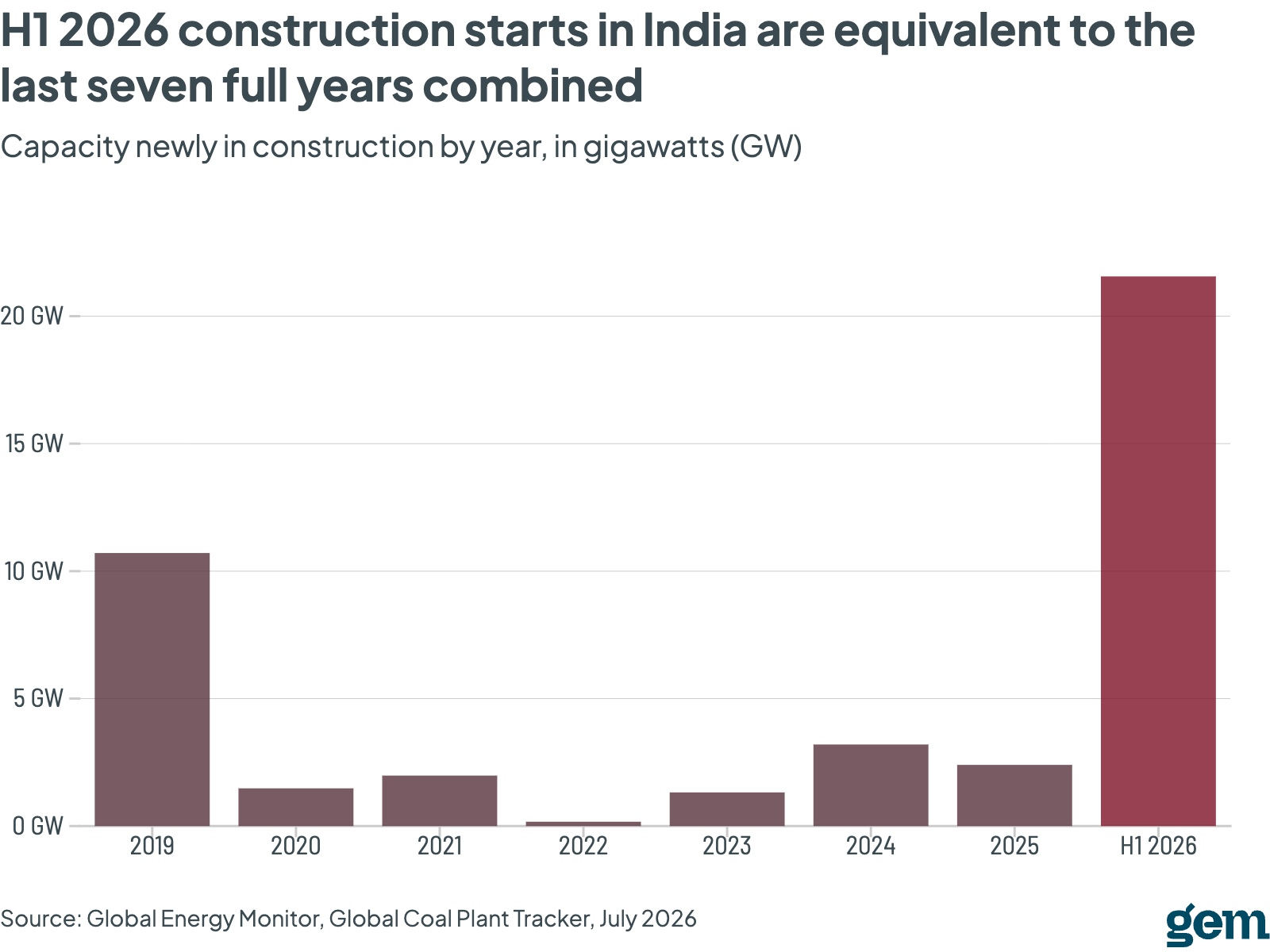
In India, the first half of 2026 saw a major spike in construction starts. 21.6 GW of coal power capacity entered construction, equivalent to the previous seven full years combined. The capacity spans fifteen power stations across ten states. An additional 9.7 GW was newly proposed in India.
Elsewhere, retirements slowed but new proposals did not accelerate
In a time of global energy insecurity, only seven countries retired coal units in the first half of 2026: China, Greece, the United States, Germany, Japan, Russia, and India. The 4.9 GW retired represents the lowest half-year total since GEM data collection began in 2015.
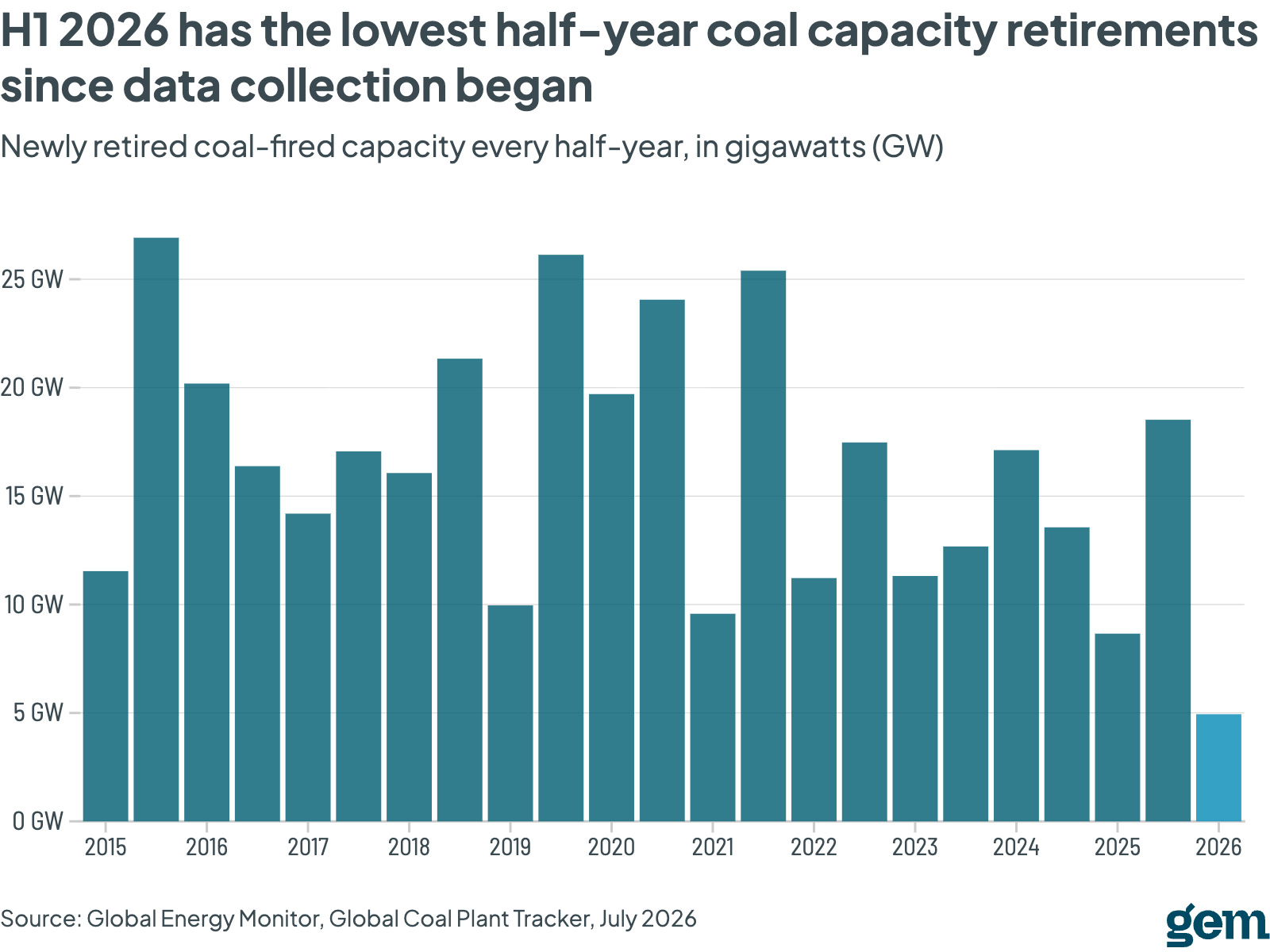
But, the low retirements were not paired with a substantial increase in newly proposed capacity. No country outside of China and India proposed more than 2 GW of coal power in the first half of year, and the 10.6 GW proposed in the rest of the world is only slightly more than the 10 GW proposed in the first half of 2025. Vietnam was the only Southeast Asian country to propose new coal power capacity in the first half of the year, despite the region’s vulnerability to shocks in the gas market.
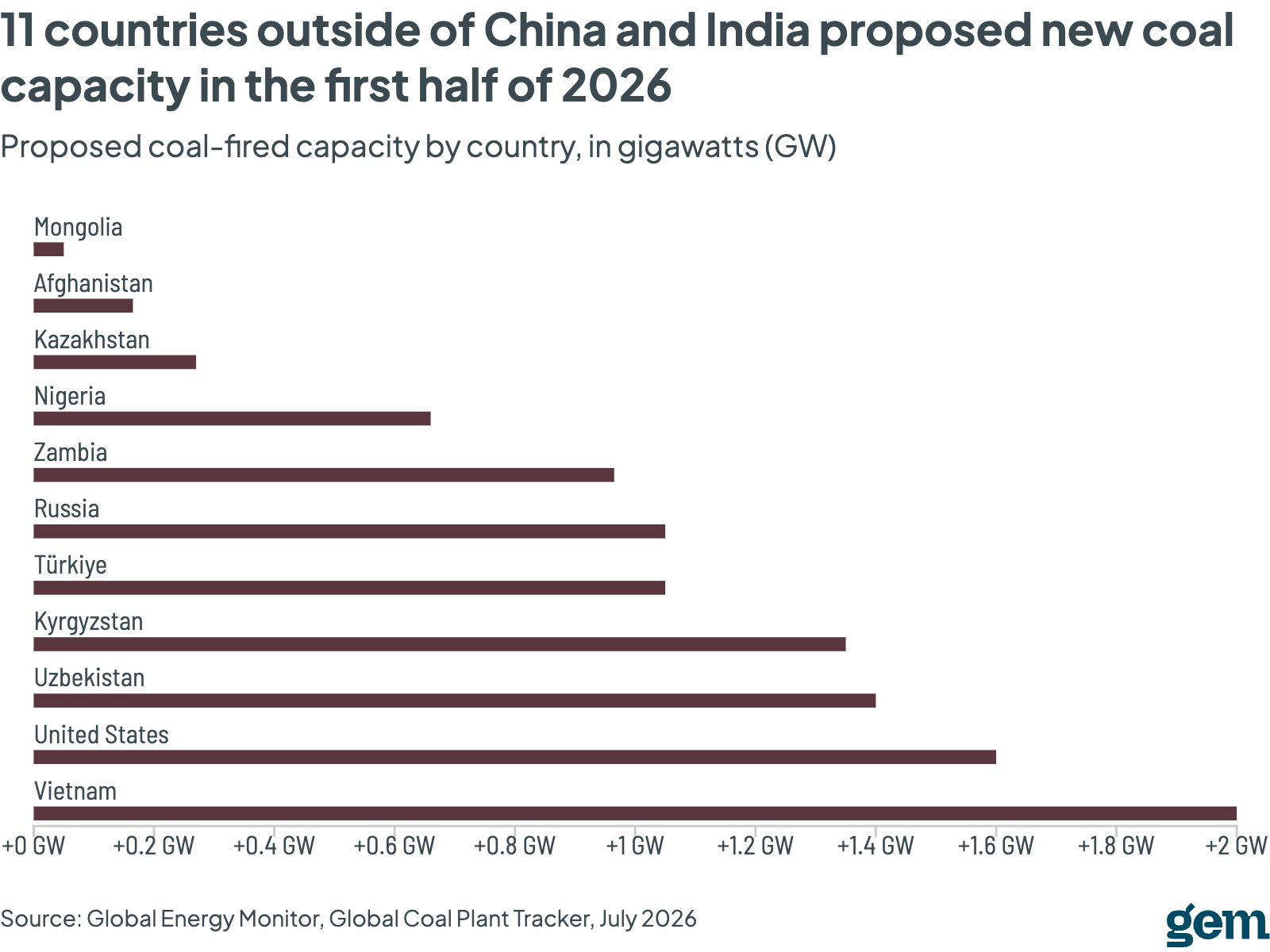
In Türkiye, the annulling of the Afşin-Elbistan A power station expansion’s environmental impact assessment in July would have left the country with no active coal proposals months before hosting the upcoming COP31 conference, but a 1 GW expansion of Cenal power station was initiated in June. In the United States, an allocation of coal financing by the Department of Energy included a new 1.6 GW proposal in the state of West Virginia. In Zambia, five small coal plants were proposed, and another five proposals were newly announced across Eurasia.