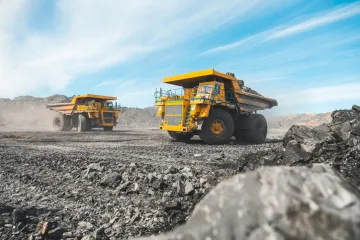
Data in the Global Coal Mine Tracker show proposed coal mining capacity expanded last year by 11% compared to 2024, rising to 2,521 million tonnes per annum (Mtpa).
The rise in proposals is at odds with the expected plateau in coal demand by 2030 forecasted by the International Energy Agency, as well as with the 2025 decline in coal-fired electricity generation reported by Ember, as wind and solar overtook coal in the global electricity mix for the first time.
The increase was driven almost entirely by India, where proposed capacity nearly doubled from 329 Mtpa to 638 Mtpa. The states of Jharkhand and Odisha accounted for much of this growth, doubling proposals for new coal mines as India's Ministry of Coal pursues an ambitious target of nearly 1.15 billion tonnes of coal production in fiscal year 2025–26 to meet rising demand from heatwaves, economic growth, and broader energy security concerns.
While proposed coal mining capacity increased by 11% in 2025, new coal mine commissioning moved in the opposite direction. About 113 Mtpa entered operation in 2025 — down nearly 40% from 185 Mtpa the previous year, which had already been the lowest annual total in a decade.
The decline in newly commissioned mine capacity was driven largely by developments in China and Australia, where capacity additions fell by 44% and 96%, respectively. In China, the growing share of electricity generated by wind and solar, together with National Energy Administration measures to strengthen mine safety inspections, tighten expansion approvals, and curb coal production, likely contributed to the slowdown.
Meanwhile, shrinking demand from several of Australia's top thermal coal export markets — Japan, South Korea, and Taiwan — are impacting the pipeline of its mine projects. The recent ban on new “greenfield” coal mines in New South Wales, which accounts for approximately 44% of Australia’s coal production, suggest capacity additions will likely remain lower in future years.
These trends point to a mining sector increasingly disconnected from underlying market signals: While demand growth and new mine commissioning are slowing, a small number of countries continue to sustain a large pipeline of future mine development. Together, just five countries (China, India, Australia, Russia, and South Africa) account for nearly 92% of the global project pipeline.
At the same time, more than half of all proposed capacity (1,297 Mtpa) remains in the pre-permit stage, while another 443 Mtpa has received approval but has not yet begun construction. Together, these pre-construction projects account for nearly 70% of the global development pipeline.
Many projects still require permits, financing, and final investment decisions before construction can begin, leaving a significant opportunity for governments, investors, and financial institutions to prevent additional capacity from advancing.
Dorothy Mei, Project Manager for the Global Coal Mine Tracker at Global Energy Monitor, said, “Advancing more coal mining capacity in this market climate risks creating long-lived assets that can become increasingly uneconomic over time. This exposes governments, companies, and investors to stranded assets, weaker project economics, and heightened market volatility resulting from excess production capacity.”
Tiffany Means, Senior Researcher at Global Energy Monitor and co-author of the report said, “The economic rationale for expanding coal mining becomes progressively weaker, as low-cost clean energy continues to displace coal. Rather than locking in decades of additional coal production, governments have an opportunity to cancel projects that remain in the development pipeline before they advance to construction.”