
Home
Close Tracker Map 

Main navigation

About
About
About GEM

What is a tracker?

People

Careers

Financial information

Contact us

Our impact

Annual reports

Partners

Who uses GEM research

Support our work

Subscribe

Give now

Funders and donors

Browse data
Trackers
Oil and gas

Oil and gas plants

Oil and gas extraction

Oil infrastructure

Gas infrastructure

Coal

Coal plants

Coal mines

Coal terminals

Renewables and other power

Solar

Wind

Hydropower

Geothermal

Bioenergy

Nuclear

Heavy industry

Iron and steel

Cement and concrete

Iron ore mines

Chemicals inventory

Finance and corporates

Energy ownership

Private equity

Coal project finance

Gas project finance

Energy transition

Integrated power

Global energy transition

Methane emitters

Latin America energy

GEM.wiki

Insights and updates
Insights
Reports and briefings

Updates
Press releases

In the news

Newsletters
Coal Wire

Inside Gas


Search
Download data
Home
May 2026
Press release
Energy transition

BRICS shatters renewable and fossil power records

Share on:
   

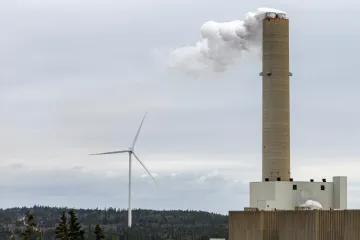
Power capacity additions across the BRICS bloc of nations reached historic highs in 2025, deepening a split energy transition where unprecedented renewable milestones are occurring alongside an unmatched surge in fossil fuels.

New analysis from Global Energy Monitor’s (GEM) Global Integrated Power Tracker reveals that the annual capacity additions for each of the bloc's four largest power sources — solar, wind, coal, and oil and gas — all surpassed previous records in the same year.

Solar and wind additions reached a record 497 gigawatts (GW) in 2025. However, this clean energy boom remains heavily concentrated, driven overwhelmingly by China and India.

At the same time, fossil power rose year-on-year across the ten-member group, adding 125 GW of new coal, oil, and gas capacity. Even after factoring in retirement volumes, which jumped to a five-year high, the bloc registered a net annual increase of 115 GW in fossil capacity — the highest net increase ever recorded and 11% above the previous peak in 2015.

Key findings include:

  • The pipeline surge: The combined utility-scale solar and wind project pipeline in the BRICS expanded by roughly 25% in 2025 to reach 2,317 GW. This massive clean energy pipeline is now 2.5 times larger than the group's 927 GW fossil pipeline, which itself grew by 12%.
  • China’s dominance: China drove the majority of the bloc's capacity additions, installing a record 315 GW of solar and 119 GW of wind. Yet, it also recorded its largest coal plant additions in more than a decade (78 GW), accounting for 84% of all new BRICS coal capacity.
  • Renewables erode generation, not capacity: Despite the expansion of physical coal infrastructure, record solar and wind output helped drive a shift in generation. Coal-fired power generation fell by nearly 2% in China and approximately 3% in India year-on-year, pointing to mounting coal overcapacity and declining plant utilization rates.
  • An uneven landscape: While countries like South Africa and Brazil checked fossil growth with expanding solar networks, much of the remaining bloc — including Indonesia, Russia, and Iran — continues to advance power sector development heavily rooted in fossil fuels, with future pipelines tilted away from wind and solar.

James Norman, Project Manager for the Global Integrated Power Tracker, said, "The BRICS bloc is operating under an increasingly contradictory energy pattern. Clean energy pipelines are scaling up at twice the speed of fossil fuels, and renewables are successfully meeting incremental electricity demand to push down growth in coal generation. Yet, legacy approvals and entrenched domestic buildouts mean coal capacity is expanding even as its utilization falls."

India’s 2026 BRICS presidency puts renewed focus on whether the bloc can turn record renewable growth into lower fossil fuel dependence. In leading Indian states such as Gujarat, Tamil Nadu and Rajasthan, rapid renewable growth is already contributing to falls in coal generation. Yet fossil-heavy power development continues elsewhere in India, while the nation’s updated climate pledge has been criticised for not fully reflecting the scale of progress already visible in parts of the country.

BRICS was founded in 2009 by its namesake countries Brazil, Russia, India, and China, with South Africa having joined by 2011. The bloc expanded in 2024 to include Iran, the United Arab Emirates, Ethiopia, and Egypt, followed by Indonesia in January 2025. Saudi Arabia has been invited to join and is listed as a member in some BRICS presidency materials, though its formal status remains unclear.

Tracker
Global Integrated Power Tracker

Open tracker

Report
Energy transition
Split transition: BRICS breaks renewable records — and fossil records too
May 2026

By James Norman

Read Report


Subscribe to stay informed about our latest work and updates

Join our mailing list

Subscribe to stay informed about our latest work and updates

Join our mailing list

Footer

Browse data
Oil and gas Coal Renewables and other power Heavy industry Finance and corporates Energy transition
Insights and updates
Reports and briefings Press releases In the news Coal Wire Inside Gas
About
What is a tracker? People Financial information Careers Contact Us
© 2026 Global Energy Monitor
All Rights Reserved
440 N Barranca Ave #2878, Covina, CA 91723
Built by 89up
  