Growing demand for baseload electricity is shaping interest in nuclear power, particularly among large technology companies such as Microsoft and Meta. Both have explored nuclear PPAs as a method to secure energy supply for data centers.
Microsoft signed a 20-year PPA with Constellation Energy that will help reopen a retired reactor at Three Mile Island in Pennsylvania, to be renamed the Crane Clean Energy Center, with the restart targeted for the second half of 2027. This project is intended in part to power Microsoft’s data centers and AI workloads, although transmission constraints mean full output may not be available until after 2030.
Meta also has a 20-year PPA with Constellation for the output of the Clinton nuclear plant in central Illinois, intended to support the plant’s continued operation after current state support programs expire in mid-2027. Meta has another agreement with Oklo to develop a nuclear “campus” in Pike County, Ohio, positioning the facility to directly support large-scale AI infrastructure such as its Prometheus supercluster computing system in the region.
These proposed units include small modular reactors (SMRs), which are increasingly discussed as a potential option for data center power needs due to their smaller size and theoretical deployment flexibility. However, SMRs remain at early stages with limited operating experience, making meaningful scale-up before the 2030s unlikely.
These findings are based on the latest update to the Global Nuclear Power Tracker (GNPT), which covers an additional 37 gigawatts (GW) of capacity and a new data field showing the aforementioned nuclear units with PPAs tied to data centers.
This year’s GNPT also includes:
- Expanded coverage to 1,825 units, covering 62 countries.
- Over 1,530 GW of worldwide capacity, covering all 408 GW of currently operational capacity, as well as 396 GW of prospective capacity and 562 GW in cancellations.
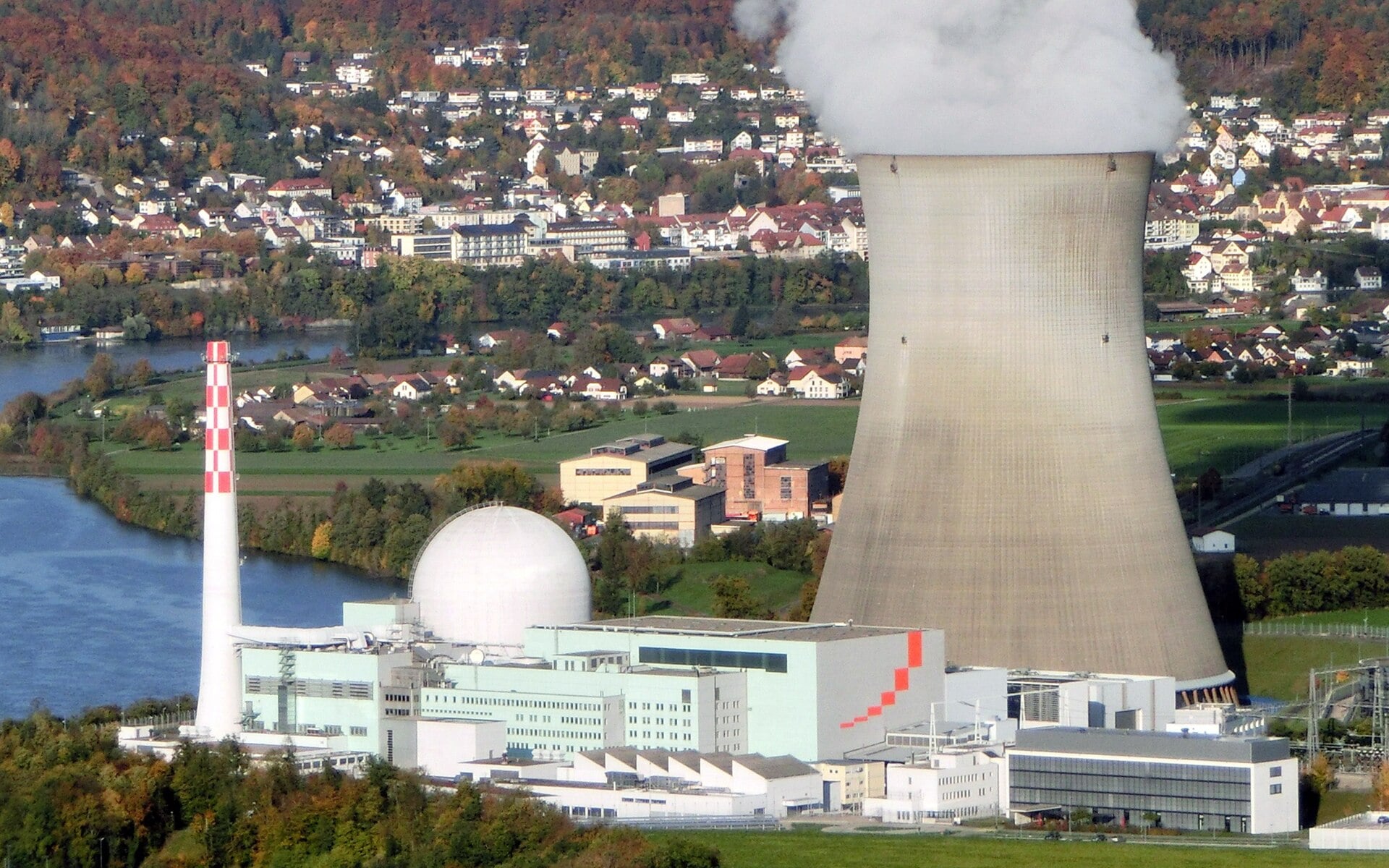
Leibstadt nuclear power plant in Bezirk Zurzach, Aargau, Switzerland. Photo by Verpacker, licensed under CC BY-SA 4.0.
Large-scale construction projects dominating the pipeline
Around the world, nuclear projects already under construction represent the most plausible near-term additions by 2030, and rather than showing an SMR boom, many of these projects remain large. Of 91 GW of nuclear capacity that has broken ground, about 60% (55 GW) has a stated in-service date of 2030 or earlier. At 5.1 GW, China’s Xudapu plant is the largest single project by total capacity expected this decade.
Also among the most significant deployments planned for the next five years are the Akkuyu project in Türkiye and the El Dabaa plant in Egypt. At a planned total of 4.8 GW each and both underpinned by Russian financial backing, they would represent each nation’s inaugural nuclear power deployment.
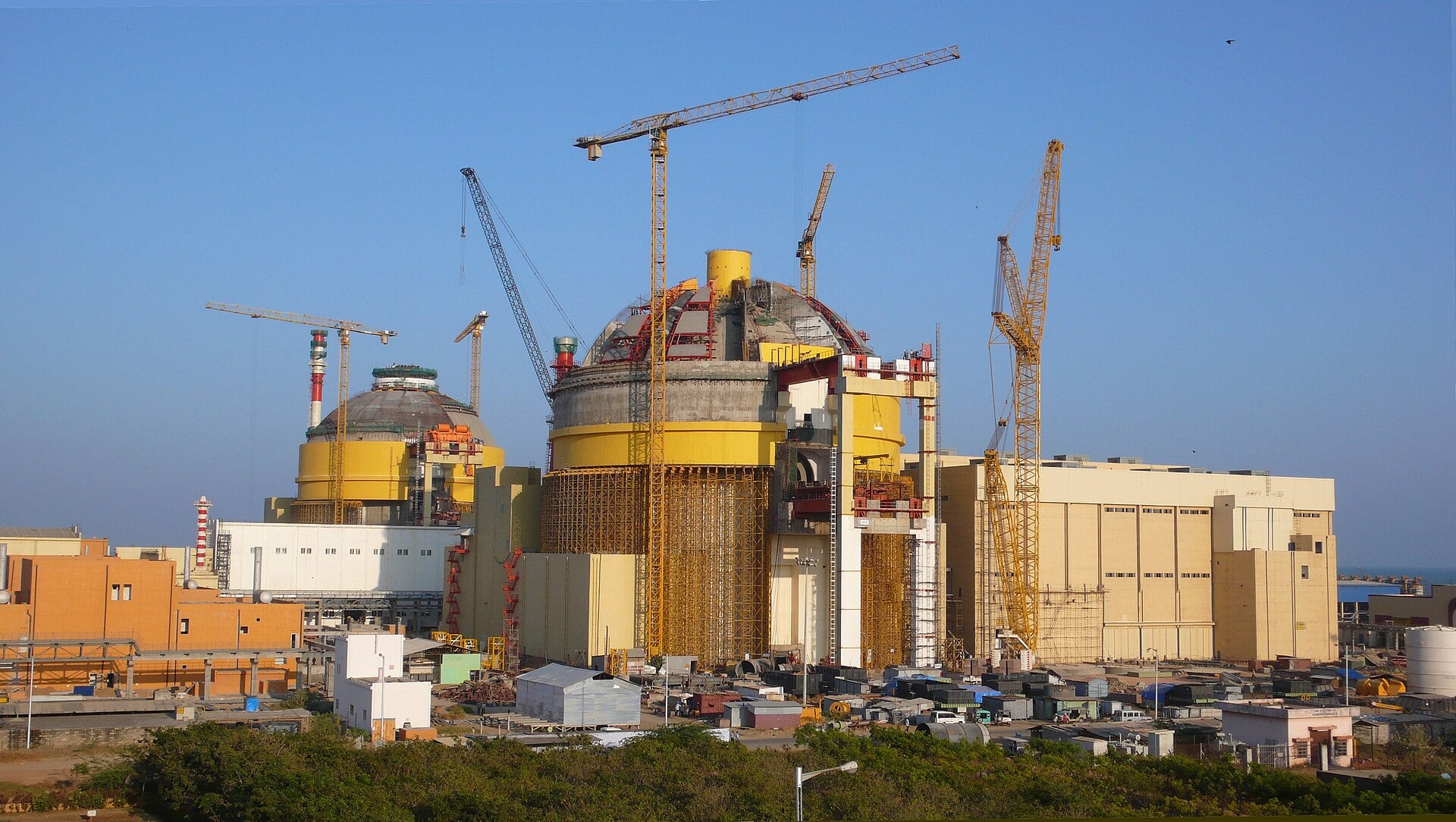
Kudankulam nuclear power plant (PWRs under construction) in Radhapuram, Tirunelveli District, Tamil Nadu, India. Photo by Petr Pavlicek / IAEA, licensed under CC BY-SA 2.0.
Beyond projects already in construction, projects in pre-construction or announced stages with a stated in-service date of 2030 or earlier total 30 GW. China (3.7 GW), India (2.8 GW), Vietnam (2.4 GW), and the U.S. (2.3 GW) have the most such capacity in pre-construction stages. However, with nuclear’s risks for long and frequently delayed development timelines, these projects may not enter operation until after 2030.
Global capacity outlook through 2030
Globally, nuclear capacity could grow by about 12% in the next five years if most of today’s project pipeline materializes. Projects already under construction account for the bulk of this outlook: GEM data show that 55.3 GW could come online by the end of 2030 from reactors that have already broken ground.
Less certain, but still plausible, are additional contributions within this timeframe from earlier-stage projects, including about 30 GW in announced and pre-construction stages with target in-service dates before 2030.
After accounting for roughly 5 GW of planned retirements, net additions by the end of this decade could reach 12% growth relative to today’s 408 GW operating fleet.
This represents a practical upper bound for near-term additions, and this average net growth of 10 GW per year would match 2016 for the highest net annual growth within the last three decades. That would mark a notable expansion for a mature technology, especially given that current global construction is at a multi-decade high and lifetime extensions are becoming increasingly common.
Nevertheless, realized outcomes are likely to fall short of the current 2030 target pipeline as nuclear projects remain vulnerable to delays, cost overruns, and cancellations.
Structural risks and historical constraints
Risks and constraints remain a defining feature of the nuclear outlook. GEM’s unit-level tracking data show that project cancellations and delays are not isolated incidents but a persistent pattern across regions and decades.
Globally, more nuclear capacity has been cancelled (562 GW) than has ever come online (544 GW). China and the U.S., projected to become the top two countries by operating nuclear capacity in the next several years, are also the world’s leading sources of cancelled nuclear capacity, with 381 GW of nuclear power cancelled in these two geographies alone.
GEM data also show that nuclear construction timelines remain long and highly uncertain, especially compared with those of wind or solar projects.




.jpg)